All posts by Admin

THG Fulfil to increase sorting capacity with 430 Libiao robots

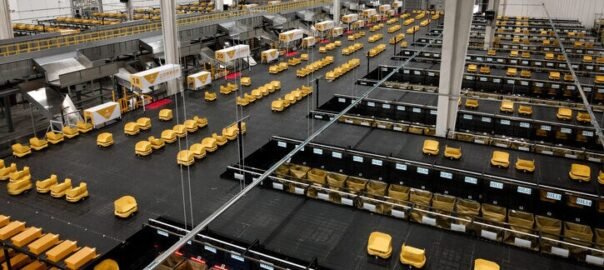
THG Fulfil has announced it will install 430 state-of-the-art T-sorting robots from Libiao Robotics at its warehouse in Manchester in the UK in a bid to increase operational capacity by 75%.

The T-sorting robots are set to be operational in September 2025 and will enable THG Fulfil to handle around one million units per day, bolstering its operations ahead of this year’s peak season.

According to Libiao, its robots have a sorting accuracy of up to 99.9% and its system is engineered to sort for multiple destinations simultaneously, with electroplating robots operating on optimal paths to maximize sorting efficiency.

Tom Killeen, COO, THG Ingenuity which owns THG Fulfil, said, “We have always believed that fulfilment is a core driver of customer excellence and brand reputation. Our collaboration with Libiao further solidifies our commitment to providing brands and retailers with industry-leading, scalable automation solutions that optimize everything from pick and pack to final-mile delivery, ultimately enhancing customer experience and driving loyalty.”

Jason Zhang, VP of sales – Europe, Libiao, added, “We’re excited to partner with THG Fulfil, showcasing the elegance and scalability of Libiao Robotics’ solutions. Our compact, modular robots enable rapid plug-and-play deployment. With THG Fulfil as our UK distribution partner – leveraging their vast retail network and warehouse automation expertise – we look forward to expanding Libiao’s reach across new industries.”

Author Credits:- HAZEL KING
Parcel and postal technology INTERNATIONAL

Heineken to invest over $2.7 billion in Mexico through 2028

Beer maker Heineken will invest $2.75 billion in different projects in Mexico, the company’s CEO in the country said on Wednesday.
Oriol Bonaclocha said during Mexican President Claudia Sheinbaum’s morning press conference that the investment will include the construction of a new factory in the country’s southeast.
The new plant in the state of Yucatan will have an initial production capacity of 4 million hectoliters and that amount is expected to be doubled in the future depending on the company’s needs, Bonaclocha said.
“We do not plan to close any factories, this is an expansion,” he added.
In April, Grupo Modelo, the producer of Corona and other Mexican beer brands, announced it would invest more than $3.6 billion in Mexico, despite concerns over water shortages in the country.
The relationship between beer makers and other industries like agriculture has been a longstanding issue in Mexico.
Almost three years ago, the construction of a Constellation Brands brewery in Mexicali was halted to protect local water resources and moved to Veracruz in eastern Mexico.
News Credits- Reuters

First EUROSPAR supermarket in Finland launched

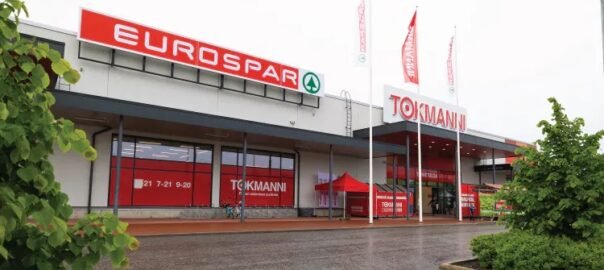
Ylöjärvi, located west of Tampere, is the first city in Finland to have a versatile EUROSPAR supermarket as part of the Tokmanni store portfolio.

The EUROSPAR store concept, marking the return of the SPAR brand to Finland after nearly twenty years, offers a diverse selection of affordable groceries that meets customers’ shopping needs in one place.

“In Finland, the EUROSPAR supermarket concept and its vivacious store appearance are based on the international EUROSPAR store format and elements, which have been developed in accordance with best practices and successfully operate around the world,” says Harri Koponen, Vice President, Store Network and Concept for Tokmanni Group’s operations in Finland.

The EUROSPAR supermarket, which opened on 12 June in Ylöjärvi and offers an extensive grocery selection, is just the beginning. Tokmanni, the SPAR licensee in Finland, will renew all of its food departments selling fresh food to align with the international SPAR brand. Tokmanni will introduce more SPAR products from around the world to shoppers of its 204 Tokmanni stores.

The combined retail space of Ylöjärvi’s Tokmanni and EUROSPAR supermarket is around 6,000m2 of space, with the EUROSPAR supermarket being over 2,000m2. Customer service at Tokmanni and EUROSPAR stores in Ylöjärvi is provided by a team of around 50 retail professionals.

International assortment

Local food or food products from small producers or other local companies are available at the EUROSPAR supermarket in Ylöjärvi. This is complemented by a variety of product offerings reflecting the international SPAR brand and shopper interest in diverse cuisine solutions.

The EUROSPAR supermarket product selection was determined by listening to customers. Both local and other domestic products in the range reflect tastes from around the world.

More diverse food selections

Tokmanni’s partnership with SPAR International and the very extensive procurement channels formed together with SPAR licence holders in different countries worldwide offer Tokmanni an excellent opportunity to sell SPAR private label and other daily consumer goods that are of great interest to customers all over Finland.

Tokmanni is also exploring opportunities to operate a grocery business with SPAR formats in some Tokmanni stores, in addition to those that already sell fresh food. However, at this time, Tokmanni’s main focus is on the SPAR product ranges in all Tokmanni stores, as well as in stores that already sell fresh food, gradually transforming them to align with the SPAR concept.

News Credits:- SPAR international

Meesho becomes public entity in run up to IPO

E-commerce business Meesho’s board of directors has given its go ahead for its conversion into a pubic entity as the business moves towards readiness to launch an initial public offering.

“The company is currently exploring various strategic alternatives for its long-term growth and value enhancement, which may include, at an appropriate time, an initial public offering of its equity shares and listing on a recognised stock exchange in India,” wrote Meesho in a filing with the Registrar of Companies, ET Retail reported. “While the board of directors has not yet approved or initiated any IPO process, the company intends to maintain readiness from a regulatory and compliance perspective to enable such an offering when deemed appropriate.”

Making the conversion from a private limited company to a public limited company is needed for a business to prepare for an IPO in India. Along with this transition, Meesho is also undertaking the moving of its domicile from the US to India. As part of this, the business has applied to the National Company Law Tribunal to approve its domicile change, the Economic Times reported.

Once Meesho is officially based in India, the renamed entity ‘Meesho Limited’ will become the parent company of the e-commerce platform. Backed by SoftBan, Tiger Global, and Prosus, Meesho’s gross merchandise value run rate totalled $6.2 billion, according to a report by brokerage CLSA in March this year.

Author Credits:- Isabelle Crossley
FASHION NETWORK

Yinon Raviv

Interview with Yinon Raviv | Chief Business Expansion Officer | Nayax

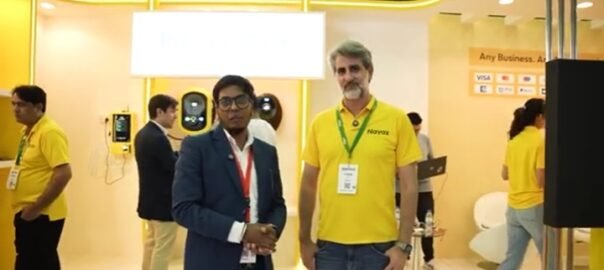
Nayax is a global payment company,  they operate in over 100 countries worldwide. It provides end to end cashless solutions across several sectors, with a focus on three main verticals: unattended domain, attended retail, then Nayax’s energy which supports EV charging. Nayax primarily operates in Europe, North America, Australia and New Zealand.
Yinon provides in depth insights into Nayax’ s plan for the Middle East region.

marco tadros

Exploring Amazon ADS | with Marco Tadros | Business Lead for the Middle East Market | Amazon ADS

Marco gives the audience an insight into Amazon Ads and provides a brief overview of how the platform works, particularly from the perspective of a seller onboarding onto Amazon Ads. When asked whether the solution is limited to sellers in the UAE or available in other markets, Marco explains that Amazon Ads has a presence in four marketplaces: the UAE, Saudi Arabia, Egypt, and Turkey, where both sellers and vendors can offer their products to customers.

kishore biyani

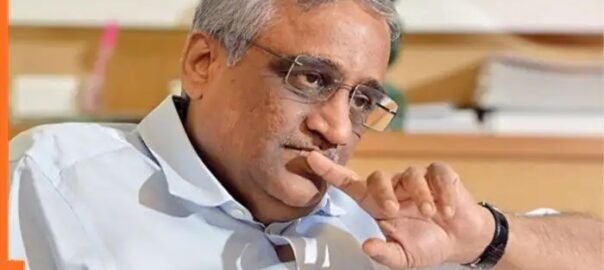
Meet man who was once ‘retail king’ of India, lost everything due to one mistake, owner of Rs 152257647298 is now bankrupt, name is….

After tasting success in fashion retail with Pantaloons, Kishore Biyani set his sights on capturing the grocery market and established Big Bazaar.

Kishore Biyani, the founder of Big Bazaar– India’s first retail store– and the Pantaloons clothing brand, was once called the ‘retail king’ of India as his chain of retail stores earned hefty profits, often registering daily earnings well in excess of Rs 30 crore or more. However, a single mistake toppled the retail empire built by Kishore Biyani, bankrupted him, and sent him to the deepest pits of obscurity.

Let us delve into the shocking riches to rags story of Kishore Biyani:

The birth and rise and fall of Pantaloons

The story begins in 1983, when after finishing college, Kishore Biyani decided to start his own venture, instead of joining his father’s business. In college, Biyani found that stone wash trousers were wildly popular among young men in those days, and fabric’s demand was increasing in India at a rapid pace.

Realising the demand, Biyani purchased 200 meters of the fabric from Jupiter Mill, and sold it to earn a hefty profit. However, soon Kishore Biyani stumbled upon the idea of manufacturing and trading fashionable stone wash trousers instead of selling the fabric to other manufacturers, thus establishing the Pantaloons brand.

Pantaloons grew at a rapid pace, and soon opened its first retail showroom in Kolkata, where the brand launched women’s and kids’ clothing along with men’s apparel. The store’s light colors, lighting, and the overall look and feel, were designed to evoke a calming shopping experience, and soon Pantaloons made Kishore Biyani the undisputed king of fashion retail in the country.

How Big Bazaar made Kishore Biyani India’s ‘retail king’?

After tasting success in fashion retail with Pantaloons, Kishore Biyani set his sights on capturing the growing grocery market. Biyani observed that people only spend about 8 percent of their income on clothes, and decided to sell groceries, stationery, food items, and jewelry along with clothing.

Biyani’s unique plan was to make everything, from clothes to groceries and kitchen essentials, available to consumers under a single roof, and thus Big Bazaar, India’s first retail store, was born.

Big Bazaar was targeted towards the growing middle class, so instead of an expensive, posh-looking store, Biyani decided that his retail store would have the feel of a regular grocery shop, where the sales persons were dressed in regular clothes, instead of bow ties and suits. The name Big Bazaar resonated with the common man, and made enhanced its appeal, and soon the brand grew into a behemoth that minted over Rs 30 crore on a daily basis.

Kishore Biyani wanted to compete with local grocery shops, so his strategy revolved around offering cheaper prices than traditional grocery stores.

Beyond Big Bazaar, Biyani wanted to establish a place where consumers could shop for all types of goods under a single roof, and thus opened the Central Mall in Bengaluru in 2004. The 20000 square meters mall had everything from footwear to home decor, food, grocery, jewellery stores, food courts, restaurants, pubs, and movie theaters.

Biyani’s Future Group– the holding company which had all his brands like Big Bazaar, Central Mall, Easy Day, and Pantaloons, under its umbrella– had the largest share in India’s retail sector, and made Biyani the ‘retail king’ of India.

The fall of Kishore Biyani

After conquering the retail industry, Kishore Biyani desired to venture into every business which directly dealt with the consumer, but this proved to be downfall because his unplanned expansion resulted in mounting debt which ultimately swelled to over Rs 12000 crore.

Soon, Biyani was forced to sell the Central Mall for Rs 476 crore, and while Big Bazaar kept going for year despite large debts, its sales crashed, and so did Biyani’s retail empire, during the 2008 recession. In March 2019, Biyani sold the Pantaloons brand to the Aditya Birla Group for Rs 1600 crore, while banks froze the assets and shares of Future Group after he failed to clear debts.

Later, Kishore Biyani sold Big Bazaar to Reliance Retail– Indis’s largest retailer run by billionaire Mukesh Ambani’s daughter Isha Ambani. Reliance has now renamed Big Bazaar to Smart Bazaar.

Kishor Biyani net worth

At the peak of his business success, Kishore Biyani had net worth pegged at USD 1.78 billion in 2019, according to Forbes. However, after bankruptcy, his current wealth is believed to be a fraction of the fortune he once owned.

Author Credits- Gazi Abbas Shahid
India.com

Dollarama

Dollarama beats quarterly estimates as consumers seek cheaper goods

Canada’s Dollarama (DOL.TO), beat quarterly sales and profit estimates on Wednesday, as consumers favored discounted alternatives for household supplies and groceries amid domestic economic uncertainty.

Toronto-listed shares of the company rose nearly 9% after CEO Neil Rossy said that the company will continue to hold on its current price “for as long as possible” and adjustments to product prices will be a “last resort.”

Canadian consumers are relying on cheaper offerings across categories, ranging from pantry staples to cleaning supplies, as they curtail household spending amid economic uncertainties, benefiting dollar store operators like Dollarama.

A price hike would likely curtail demand, and Dollarama said it expected to take a margin hit from counter tariffs imposed by Canada on a portion of goods from the United States.

About 53% of the products it sells were procured from North American vendors while other overseas imports accounted for 47% of total procurement.

Dollarama reported comparable store sales of 4.9%, above estimates of 3.4% in the quarter ended May 4, according to data compiled by LSEG.

First-quarter net sales of C$1.52 billion ($1.11 billion) narrowly beat analysts’ estimates of C$1.5 billion.

The company’s net earnings per share of 98 Canadian cents beat analysts’ expectations of 84 Canadian cents.

Dollarama also reaffirmed its annual comparable sales expectations of a 3% to 4% rise.

However, TD Cowen analyst Brian Morrison sees a potential for Dollarama to raise its forecast in the second half of the fiscal year, saying that the company continues to “underpromise and overdeliver.”

In the U.S., off-price and discount retailers have painted a mixed picture as American consumers have turned cautious and limited their purchases.

Dollar General (DG.N), and Dollar Tree (DLTR.O), raised their annual forecasts while Ross Stores (ROST.O), withdrew its fiscal 2025 forecasts.

($1 = 1.3682 Canadian dollars)

Author Credits- Neil J Kanatt
Reuters

dhl group

DHL Group to invest more than EUR 500 million in fast-growing markets in the Middle East

DHL Group (“DHL”) has announced plans to invest more than EUR 500 million in the Middle East, with a strategic focus on the rapidly expanding Gulf markets of Saudi Arabia (KSA) and the United Arab Emirates (UAE). This investment, set to take place between 2024 and 2030, underscores DHL’s commitment to the region and its importance for the future of global trade. DHL Group’s Strategy 2030, launched in 2024, prioritizes growth regions and geographic tailwinds generated by shifts in global trade.

The investment spans all four DHL divisions – DHL Express, DHL Global Forwarding, DHL Supply Chain, and DHL eCommerce – and will significantly strengthen the region’s logistics backbone.  By enhancing infrastructure, expanding networks and capacity, and elevating service capabilities, DHL aims to empower businesses operating across and with the Middle East to capitalize on growth opportunities from trade, ensuring support and resilience for customers as they navigate evolving market demands. The company’s divisions provide a broad portfolio of logistics and transportation services to customers in the Middle East, including express parcel delivery, air, ocean and overland freight, warehousing, fulfilment and distribution, customs brokerage and specialized operations for sectors such as life sciences, healthcare, e-commerce and battery logistics.

“The region of the Gulf Cooperation Council (GCC) is rapidly emerging as a global logistics and innovation hub,” said John Pearson, CEO of DHL Express. “Our investment reflects the region’s increasing strategic importance in connecting Asia, Europe, and Africa, and our commitment to supporting its transformation into a catalyst for regional and global trade. DHL Express is seeing dynamic growth and export potential in the region’s e-commerce sector, for example, which is providing opportunities for entrepreneurs and smaller businesses to expand their offering to global markets.”

Supporting FDI, exports and building supply chain resilience

The Middle East is emerging as a vital trade hub, facilitating commerce between Asia, Europe, and the US while serving as a gateway to Africa. The region is witnessing growth not only due to attracting investments from multinationals expanding their operations but also because Gulf- and Middle East-based businesses are growing and increasing their exports. DHL’s services, the local and global expertise of its team, and the flexibility offered by the company’s extensive transportation and warehousing network and digital platforms, automation and technologies help businesses build supply chain resilience at a time of heightened volatility and uncertainty in global trade.

Hendrik Venter, CEO of DHL Supply Chain, Europe, Middle East & Africa, added, “DHL Supply Chain has actively expanded in Saudi Arabia and UAE in recent years, recognizing the positive economic development, the increasing maturity and sophistication of supply chain operations in the region and the growing demand for specialized, outsourced logistics support. With a strong focus on the energy sector, life sciences, healthcare, and technology, we are poised to take advantage of our contract logistics expertise to meet the unique needs of our customers and drive innovation in these critical areas.”

Amadou Diallo, CEO of DHL Global Forwarding, Middle East & Africa, remarked, “This investment underscores our confidence in the Middle East’s economic trajectory and our continued commitment to be ahead of the curve in digital capabilities and sustainable transportation for our customers. We also consistently aim to find entrepreneurial freight forwarding solutions that build supply chain resilience, keep their goods flowing and help them to uncover growth opportunities in a world that is characterized by uncertainty and volatility. By expanding our operations, we will be even better positioned to support our clients in navigating the complexities of international trade and logistics.”

DHL Group recognizes the growing opportunities in the energy sector, encompassing traditional oil and gas as well as renewables and electrification. The company also sees potential in the life sciences and healthcare markets, alongside the burgeoning e-commerce landscape. For example, The Kingdom of Saudi Arabia (KSA) is experiencing a strong inbound market for B2C, especially with high-end goods, driven by ongoing tourism initiatives and events.

Targeted investments in quality, capacity and efficiency

The investments will focus on the following areas across DHL’s business units:

  • DHL Express: Investments will be made in hub and gateway facilities, as well as enhancing aviation capacity to improve service efficiency and delivery speed.
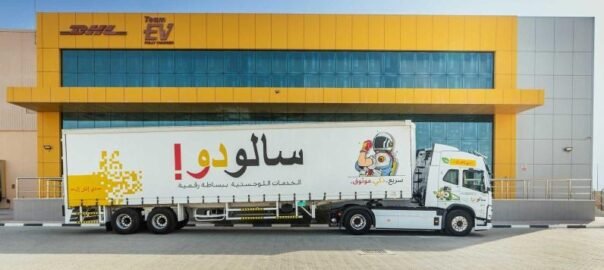
  • DHL Global Forwarding: The company will expand its overall presence in the region, invest in its fleet – including electric trucks – and pursue joint venture initiatives such as the recent joint venture with Etihad Rail to enhance connectivity and logistics capabilities.
  • DHL Supply Chain: There will be an expansion of the contract logistics offering in both the UAE and KSA, which includes increasing warehousing capacity, upgrading equipment, and integrating advanced technology to optimize operations.
  • DHL eCommerce: The acquisition of the delivery provider AJEX in Saudi Arabia will enhance DHL’s e-commerce capabilities, facilitating better last-mile delivery services in a rapidly growing market.

DHL is also committed to sustainability, investing in alternative fuel, and electric delivery vehicles, aviation fuels in air freight and biofuels for road and ocean freight, as well as solar energy and clean power for facilities. This commitment ensures that supply chains become more sustainable, and customers achieve their net zero ambitions. This is aligned with the agenda of governments in the region to lead on environmental sustainability.  DHL aims to implement best practices in logistics and innovation, strengthening its longstanding position as a leader and investor in the talent and economic potential of the Middle East.

News Credits- DHL Group