
Monthly Archives: November 2024

OMXE Land in Dubai

One Infrastructure, Three Ways In: OMXP, TOWB and OMXE Land in Dubai

At Seamless Middle East 2026, a single stand told the story of how payments, remittance and crypto are converging into one system

Somewhere between a bank transfer and a blockchain sits the future OMXP is building. The Online Money Exchange Platform brought its full stack to Dubai World Trade Centre for Seamless Middle East 2026, running 22 to 24 September alongside Seamless Fintech and rather than showing up with one product, it arrived with three ways of solving the same problem: how to move money and digital assets across borders without months of bank negotiations or a homegrown tech team.

OMXP, TOWB and OMXE exhibited together at Seamless Middle East 2026 the message “One Infrastructure for Remittances & Crypto.”

Who they are

OMXP builds the plumbing so other companies don’t have to. Building bank relationships and currency corridors from scratch takes years, OMXP’s pitch is that businesses shouldn’t have to wait that long. Fintechs, financial institutions, brokers and payment companies can launch a fully branded remittance or crypto service, right down to their own logo and domain, on top of OMXP’s ready-made backend. The platform currently reaches 80+ countries through 160+ payment methods. OMXP operates as a service of GMR International Group Ltd (USA).

TOWB s built for businesses that move money often, not just once. It’s a remittance platform that lets companies top up with USDT and pay out in local currency to bank accounts and mobile wallets including networks like M-PESA, MTN MoMo and Orange Money often within minutes rather than days. TOWB pitches itself at exchange providers, transfer agencies processing customer payments at scale, payroll teams paying international staff on the same day every cycle, and companies simply tired of hidden markups eating into transfers.

OMXE, gives digital assets somewhere real to go. It’s a multi-currency wallet and exchange platform built to buy, store, swap and convert cryptocurrency and stablecoins, then move the value out as local currency to bank accounts and mobile wallets across 80+ countries. Whether the user is managing a personal wallet, running crypto payments for a business, or overseeing a larger digital-asset treasury, OMXE is built to turn holdings that only existed on a ledger into money someone can actually spend.

Together, in Dubai

At Seamless, the three products shared one message: one infrastructure for remittances and crypto. Visitors moving between the OMXP, TOWB and OMXE panels on the stand saw, in effect, a single payment rail viewed from three angles infrastructure, remittance and digital assets each usable on its own or stitched together under a business’s own brand.

About OMXP
OMXP is a white-label financial infrastructure platform, giving businesses the tools to launch payment, remittance and digital asset services under their own brand. Its core products, TOWB and OMXE, extend that infrastructure into stablecoin remittance and crypto-to-cash conversion respectively.

Learn more: www.omxp.com | www.towb.com | www.omxe.com

BigBox Media was on site throughout Seamless Middle East 2026 as the event’s Official Interview Partner, speaking with exhibitors and industry leaders from across the show floor. This piece on OMXP, TOWB and OMXE is the first in that coverage more conversations from the show are coming soon. Stay tuned.
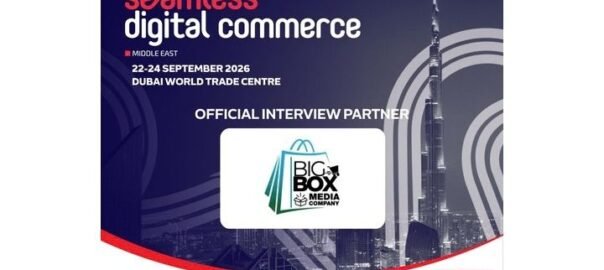

Seamless Digital Commerce Middle East 2026

BIGBOX Media Company: As Official Interview Partner for Seamless Digital Commerce Middle East 2026

Few cities capture the pace of digital commerce in the region quite like Dubai. It has firmly established itself as a digital commerce hub for the wider Middle East, North Africa, and South Asia corridor. The city’s combination of a tech-forward consumer base, strong logistics and payments infrastructure, and its position as a gateway between East and West has made it a natural testing ground and launchpad for retail and fintech innovation. Government-backed digital transformation initiatives, rapid growth in e-commerce adoption, and a steady influx of global retail and payments players have kept the market moving fast — making events like Seamless Middle East a genuine barometer of where the region’s digital economy is headed.

BIGBOX Media Company is proud to announce we are Official Interview Partner for Seamless Digital Commerce Middle East 2026, taking place from 22–24 September 2026 at the Dubai World Trade Centre.

As one of the region’s flagship events for retail, e-commerce, fintech, and digital commerce, Seamless Middle East brings together industry leaders, innovators, and decision-makers from across the Middle East and beyond to explore the future of digital retail. This year, BIGBOX Media steps into the spotlight as the show’s official media voice for on-ground interviews capturing the insights, strategies, and stories shaping the industry directly from the people driving it forward.

As Official Interview Partner, BIGBOX Media will be conducting exclusive on-site interviews with speakers, exhibitors, and thought leaders throughout the three-day event. These conversations will spotlight the trends, innovations, and challenges defining digital commerce across the Middle East, India, and South East Asia regions at the heart of BIGBOX Media’s editorial coverage.

From retail technology and omnichannel strategy to the future of payments and customer experience, the interviews will offer a front-row look at the ideas shaping the next chapter of digital commerce.

Meet Us at Seamless Middle East 2026

Whether you’re a speaker, exhibitor, or attendee with a story to share, look out for the BIGBOX Media team throughout the show floor. We’ll be on the ground at Dubai World Trade Centre from 22–24 September, and we’d love to connect.

#SeamlessDXB2026

Stay tuned to BIGBOX Media for exclusive interviews and coverage straight from the show.

BIGBOX Media Company is a media platform covering the retail and e-commerce sector across the Middle East, Africa, India, and South East Asia. Through articles, interviews, and event coverage, BIGBOX Media brings the latest news, trends, and leadership perspectives shaping digital commerce across these markets.

product leadership

Why Product Leadership Is the Region’s Next Competitive Advantage

Across the Middle East, India, and South East Asia, product teams are being asked to do more faster cycles, leaner headcount, and now, AI woven into nearly every stage of the build process. But while the pace of building has changed dramatically, “product leadership” as a discipline hasn’t always kept up. Many organizations still treat product decisions as something founders or engineering leads handle on the side, rather than a craft with its own skill set, judgment calls, and accountability. 

That gap is starting to close and fast. Here’s what’s actually shifting, and why it matters for anyone building products in the region right now. 

Why Product Leadership Is Having a Moment 

Product-led growth has moved from a Silicon Valley buzzword to a regional reality. More companies across the Middle East, India, and SEA are structuring dedicated product functions instead of leaving product decisions to founders or engineering by default. As competition intensifies and customer expectations rise, the difference between a product that scales and one that stalls increasingly comes down to leadership, not just execution. 

You can see it in the shape of the conversation itself: five years ago, “product manager” was a title borrowed loosely from tech hubs abroad. Today, it’s a function companies in the region are actively building around hiring for it, training for it, and increasingly, building entire events and communities around it. The discipline is maturing in real time, and the organizations paying attention to that shift are the ones setting themselves up to lead it. 

What’s Changing 

Three shifts are putting real pressure on product teams today: 

AI is compressing timelines. Research, testing, and iteration cycles that used to take weeks can now happen in days. That speed is an advantage but only for teams that know how to use it without losing rigor. 

Product now sits closer to revenue. It’s no longer enough to own the roadmap. Product leaders are increasingly expected to speak the language of growth, retention, and business outcomes not just features and sprints. 

Certainty is going down while speed is going up. Teams are being asked to move faster with less data, less time to validate, and more stakeholders wanting answers now. That’s a leadership problem as much as a process one. 

What Great Product Leaders Are Doing Differently 

The product leaders navigating this well share a few habits: 

  • They pair AI-assisted insight with human judgment. AI can generate options and surface patterns fast but deciding which trade-off to make, and defending that decision to a room full of stakeholders, still takes a person who understands the business and the customer. 
  • They build trust through speed and clarity. Faster decision cycles only work if the reasoning behind them is clear. The best product leaders over-communicate the “why,” not just the “what.” 
  • They treat product leadership as a craft, not a title. That means actively developing judgment, mentoring the next generation of PMs, and staying close to the customer not just managing a backlog. 

The Conversation Continues at MEPC 2026 

This is exactly the kind of shift we’re bringing on stage at the Middle East Product Conference 2026, on 21st October in Dubai. The opening keynote, “The Product Reset: Build for What’s Next,” sets the tone for the day how product leaders connect strategy, customer value, and business growth as expectations shift faster than traditional product cycles. It’s followed by a leadership panel on “Building Agentic Systems at Scale,” digging into how teams balance customer value, technology, and commercial priorities as complexity grows. 

If you’re building product in this region, this is where that conversation is happening. 

Join us at Middle East Product Conference 2026 in Dubai, 21st October 2026. For more details visit https://www.productconference.net/ or visit www.scribeminds.com. 

AI-assisted shopping

When Consumers Stop Searching for Products

AI-assisted shopping

Search has traditionally given retailers a clear place to compete: keywords, rankings, ads and product pages. But as consumers increasingly use different platforms to research and compare products, the discovery process could become less about where a product appears and more about whether a system considers it relevant enough to recommend.

For two decades, discovery meant typing a query into a search bar and scrolling through results. That habit is breaking faster than most retailers have noticed and the replacement isn’t a better search engine. It’s no search at all.

Ask someone in retail what “discovery” means and they’ll usually describe some version of the same funnel: a customer types a query, scans a page of results, clicks through a few links, compares tabs, and eventually lands on a product. That model powered two decades of SEO budgets, paid search strategy, and product-listing optimisation.

It’s starting to come apart. Not because search engines got worse, but because a growing number of shoppers have stopped opening them in the first place. They’re asking an AI assistant instead and increasingly, letting it do the comparing, shortlisting, and sometimes the buying too.

The habit is changing faster than the infrastructure around it

The clearest evidence isn’t a prediction, it’s already showing up in traffic logs. Adobe Analytics, which tracks purchase data across more than a trillion visits to U.S. retail sites, found that AI-referred traffic to retail sites was up 693% year-over-year during the 2025 holiday season, with November alone up 769% and December up 673%. That surge came with a shift in what the traffic was actually worth: AI referrals converted 31% more than other traffic sources during the holiday season, nearly doubling year-over-year a genuine reversal from just months earlier, when AI traffic was still converting 23% lower than non-AI traffic in July 2025. By October 2025, AI-referred visitors were converting 16% more than non-AI traffic, following a 5% edge the month before. The gap didn’t just close. It flipped.

That shift lines up with what consumers themselves report. A global study by the IBM Institute for Business Value, run with the National Retail Federation across more than 18,000 consumers in 23 countries, found that almost half of shoppers (45%) now turn to AI at some point during their buying journey using it to research products, interpret reviews, and hunt for deals. Notably, the same study found nearly three-quarters of consumers (72%) still shop in physical stores, which is a useful reminder that this isn’t a story about stores disappearing. It’s a story about what happens before the store, or the checkout page, ever enters the picture.

From search results to a single answer

The mechanics of this shift are becoming concrete. OpenAI launched ChatGPT Shopping Research in November 2025, and by early 2026 the company’s own data showed the feature was handling roughly 50 million shopping-related queries a day a small share of ChatGPT’s overall traffic, but a real and fast-growing one, running across a user base that OpenAI put at 900 million weekly active users in February 2026. Amazon has moved even further: its AI assistant (originally called Rufus, folded into “Alexa for Shopping” in May 2026) was used by more than 300 million customers in 2025, according to the company’s own Q4 earnings disclosure, and Amazon has said shoppers who engage with it are about 60% more likely to complete a purchase than those who don’t.

What connects these numbers isn’t just adoption it’s what the interaction actually looks like. Instead of ten blue links, a shopper gets a single conversational answer, often with a shortlist already narrowed down. McKinsey’s research team, which has studied this shift closely, estimates that AI agents mediating purchases directly could account for $3 trillion to $5 trillion of global consumer commerce by 2030, even under what it calls a moderate scenario. That’s not a forecast about search getting smarter. It’s a forecast about search getting skipped.

The Indian market is moving ahead of the curve, not behind it

This isn’t only a U.S. story, and for a market like India, the numbers suggest the shift may be arriving faster than in the West, not slower. Accenture’s Consumer Pulse Survey 2026, covering more than 25,000 consumers across 16 countries, found that 41.4% of Indian respondents now turn to AI before search engines when looking for information online, and 94% said they would like to shop directly within generative AI tools. A separate YouGov study conducted in India between April and May 2026 found that three in five Indian online searchers (60%) now begin at least one new search a day with an AI assistant, and 89% use AI assistants in some capacity when searching for information. Adobe’s own India-specific findings, part of its 2026 AI and Digital Trends Report, showed 65% of Indian consumers already use AI to find personalised product recommendations, with India recording the highest consumer interest in agentic AI anywhere in the Asia-Pacific region.

Put plainly: in a market retailers have long treated as a search-and-marketplace economy, a meaningful share of shoppers are already choosing not to search at all.

What this actually changes for a retailer

None of this means a brand’s website stops mattering. It means the traffic arriving there is starting to come from somewhere other than a results page, shaped by a conversation the retailer had no part in. When an AI assistant is the one narrowing five products down to two, the product page a shopper eventually lands on isn’t where the decision got made it’s where the decision gets confirmed, or completed. Product data, pricing accuracy, and review clarity now do double duty: they still have to convince a human, but they also have to be legible enough for a system to read, compare, and trust in the first place.

The uncomfortable part for retailers is that this shift rewards infrastructure over marketing spend. A search ranking can be bought. Being cited correctly by an AI system, consistently, cannot at least not yet. That gap is where the next competitive advantage in retail is likely to be decided.

At BIGBOX, we track how discovery, commerce, and AI are converging across Middle Africa, India and South East Asia, connecting retail and e-commerce leaders to the data and strategies shaping what comes next.

To know more about our upcoming BIGBOX Event: https://www.bigboxmedia.net/upcoming-events/