All posts by Admin

Why Temu is blocked from Indonesia’s lucrative e-commerce market

Retail giant Temu had a meteoric rise to become the most downloaded shopping app worldwide in 2024, but despite that success the platform’s expansion plans hit roadblocks in some South-East Asian countries.

Owned by Chinese multinational PPD Holdings and founded by billionaire Colin Huang, Temu operates in more than 80 countries including Thailand, Malaysia, the Philippines and Australia.

Temu is a shopping website and app that sells a huge range of products like clothing, household items, and electronics at extremely low prices.

Its marketing strategies include gamification and advertising heavily on social media.

Temu’s largest market is the United States, where it aired commercials at the 2024 Super Bowl urging consumers to “shop like a billionaire”.

But that same year the retail giant’s plan to enter an e-commerce market worth billions of dollars stalled.

Temu was blocked in Indonesia, South-East Asia’s largest and most lucrative e-commerce market, valued at $US82 billion ($128 billion), according to data company Statista.

The ban was intended to protect small business from cheap products flooding the country and to capture import revenue.

Similar concerns have been raised in Vietnam, where Temu’s operations were suspended in December after the trade ministry voiced concerns over product quality and the impact the online retailer might have on Vietnamese manufacturers.

Temu tried multiple times to register a trademark in Indonesia last year and each time the Trade Ministry rejected the applications.

In October, the ministry ordered Apple and Google to block the Temu app so it could not be downloaded in Indonesia.

But with a population of 280 million people, e-commerce analyst Simon Torring thinks Temu might make another bid to access Indonesia.
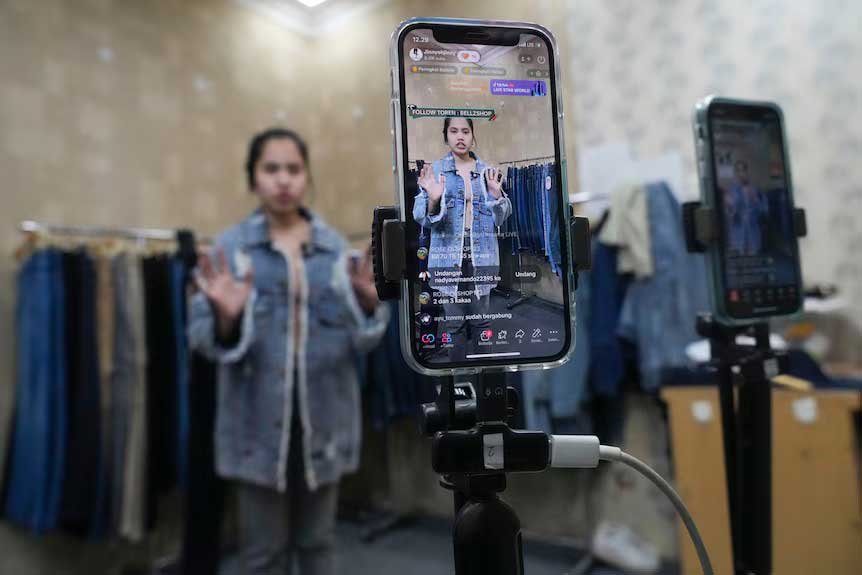
“Temu is in a stage where they just want to serve the world,” said Mr Torring, co-founder of e-commerce data firm Cube.

“Being the fourth-most populous country in the world, it is not tenable to ignore [Indonesia] or not be there.”

While Temu is blocked — and fast fashion competitor Shein doesn’t sell clothes into Indonesia — other e-commerce retailers are flourishing.

Trade rules halt Temu

Indonesia’s Trade Ministry said it rejected Temu’s trademark applications because of the country’s trade regulations.

Those regulations require goods to be imported into Indonesia by a third party — like a local wholesaler or retailer — if the goods are sent from countries that do not have an import-related trade agreement with Indonesia.

Temu connects manufacturers — which the company refers to as “sellers” who are mostly based in China — directly with consumers, cutting out these intermediaries.

It’s one of the ways Temu keeps products cheap, in a business model that also makes manufacturers compete to offer the lowest product price.

Having a third party import goods into Indonesia is important to the country’s government because it guarantees that normal import duties and taxes are paid when the goods enter Indonesia, Mr Torring explained.

More of the final retail price is captured as domestic spending, he added.

Businesses cannot compete

The Temu ban is supported by Nandi Herdiaman, chairperson of the Bandung Garment Entrepreneurs Association that represents 8,000 home textile industry businesses across Indonesia.

Mr Herdiaman said Indonesians making clothing or other textiles for small businesses could not keep costs and product prices as low as items mass manufactured in China.

“We’ll definitely lose,” Mr Herdiaman said.

Other local industries, such as those making household items and electronics manufacturers would also be unable to “compete on cost” if Temu was allowed in Indonesia, said Muhammad Zulfikar Rakhmat, director of the China-Indonesia desk at the Jakarta-based Centre of Economic and Law Studies.

“They cannot match Temu’s pricing without sacrificing profit margins,” Dr Rakhmat said.

“Over time, this could lead to reduced market share and even closures for some businesses.”

Indonesia’s Trade Minister and Vice Trade Minister declined to comment.

While Temu is blocked, other e-commerce platforms like Shopee, owned by Singapore’s Sea Limited, and TikTok Shop and Lazada, owned by Chinese companies, are allowed to operate in Indonesia.

The key difference between these platforms and Temu is that the Chinese goods sold on those sites are imported into Indonesia by a trader or wholesale importer, Mr Torring said.
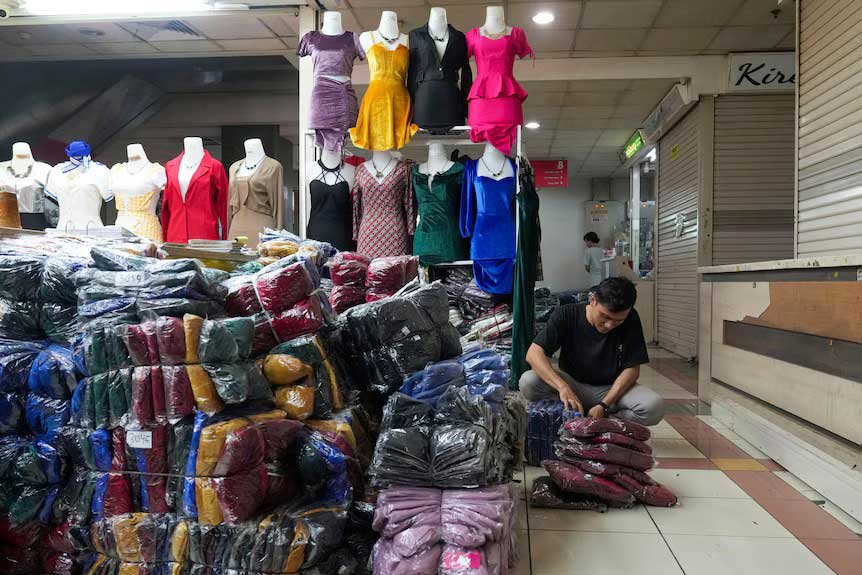
“Indonesia is very welcoming to foreign e-commerce players … it’s just that cross-border model that they don’t want,” he said.

“Local and foreign e-commerce platforms are allowed to operate if they are registered and if they are following business models that are legal.”

Mr Torring pointed out that many of the same items made in China are sold by the other online retailers in Indonesia, but the prices are higher because they use intermediaries in their supply chain.

He said Temu was now taking “serious steps” to change the platform’s cross-border model.

“In most of the western European countries and the US, most of the orders are actually fulfilled from local warehouses now.”

Temu declined to comment on the issues covered in this this story.

‘Nothing I can do’

Clothing business owner Dudi Gumilar is not concerned with which online retailers are allowed to operate in Indonesia.

“I don’t care whether Shopee, Temu, whatever, operate in Indonesia, I couldn’t care less,” he said.

For Mr Gumilar, the key issue is that Indonesian consumers still preferred to buy imported products over locally-made items.

It’s a well-known trend in Indonesia, which frustrated former president Joko Widodo who repeatedly urged consumers to buy items made in the country.

“Without the spirit of nationalism, the local small-medium businesses are doomed,”

Mr Gumilar said.

Mr Gumilar, who has run his company for two decades, said small to medium textile businesses needed more protection from the onslaught of imported goods.

“Nobody hears us even when we scream. There’s nothing I can do other than just working.”

Indonesia’s low de minimis

Indonesia was one of the first in South-East Asia to significantly reduce the country’s tax-free threshold for small or low-value packages.

Under the “de minimis” rule, parcels aren’t taxed if they’re valued under a certain amount — for example, in Australia that amount is $1,000.

Daniella Jacobs-Herd faces a decade of skin grafts after suffering severe burns from a Temu jumper purchased online, which failed to comply with Australian safety standards.

But in 2020, Indonesia reduced its threshold to a very low value, from $US75 to $US3 ($117 to $4.70).

Mr Torring said this low tax-free threshold prompted fast fashion brand Shein to leave Indonesia.

“It was no longer possible to be Shein in Indonesia. Shein is fast and cheap. Now it would be slow and not cheap,” he said.

“I would say that marked the start of when Indonesia’s e-commerce market was kind of closed to cross border e-commerce.”

Shein was contacted for comment but did not respond.

News Credit: https://www.abc.net.au/news/2025-02-28/why-temu-is-blocked-from-indonesia-s-lucrative-e-commerce-market/104979374

DHL e-commerce enters Saudi Arabia by acquiring equity stake in Ajex

DHL eCommerce and AJEX partner to capitalise on anticipated double-digit growth rate in Saudi Arabia’s parcel market.

DHL eCommerce and AJEX Logistics Services have entered into an agreement in which DHL will acquire a minority stake in the Saudi Arabian parcel logistics company. “For DHL eCommerce, whose core business is domestic parcel transport in selected European countries, the United States, and certain key Asian countries, this agreement represents an expansion into the rapidly growing Saudi Arabian e-commerce parcel market. Although AJEX only began its operations in 2021, it has already established itself as a leading parcel service provider in the rapidly evolving domestic market, with robust growth and an extensive distribution network,” says an official release from DHL.

The agreement was signed during a ceremony attended by Pablo Ciano, CEO, DHL eCommerce, Yin Zou, Executive Vice President, Corporate Development, DHL Group, Mohammed Bin Abdulaziz Al Ajlan, Deputy Chairman, Ajlan & Bros Holding and Ajlan Bin Mohammed Al Ajlan, Group Managing Director, Ajlan & Bros Holding.

“As a key component of our corporate Strategy 2030 Accelerate Sustainable Growth, we are focusing on markets like Saudi Arabia that exhibit significant growth dynamics and strong economic development,” says Ciano. “We are confident that AJEX, with its commitment to quality and strong customer focus, supported by a highly motivated team and backed by Ajlan & Bros Holding, is the perfect partner to help us expand our e-commerce-focused parcel business into this booming market. Together, leveraging our international expertise in parcel operations, we will deliver reliable, affordable, and sustainable delivery solutions.”

With 1,500 team members, AJEX provides domestic parcel processing and delivery through an extensive network that includes over 50 facilities and a fleet of more than 900 vehicles.

Ajlan Bin Mohammed Al Ajlan adds: “Saudi Arabia is dedicated to fostering economic growth and diversifying its industries under Vision 2030 with logistics serving as one of the key pillars. In this context, we are also witnessing strong growth in e-commerce, which in turn is driving expansion in the domestic parcel sector. The demand for a parcel service provider with local expertise and a global network is steadily rising. By partnering with DHL eCommerce, a globally trusted e-commerce specialist, we will be well-positioned to meet this demand in the future.”

With DHL eCommerce, all four international divisions of DHL Group will be represented and actively engaged in the market. DHL first established its presence in Saudi Arabia in the 1970s with its DHL Express business unit. The other divisions have also been operating in the country for several years, providing specialised services such as contract logistics and freight forwarding solutions, the release added.

News Credit: https://www.stattimes.com/ecommerce/dhl-ecommerce-enters-saudi-arabia-by-acquiring-equity-stake-in-ajex-1354562

RetailGPT: Bridging Fashion and Technology in India’s Retail Landscape

  • Path finder

This GenAI-powered ecosystem is transforming the retail landscape, blending advanced generative AI (GenAI), blockchain, and IoT technologies to create hyper-personalized shopping experiences and bridge the gap between physical and digital commerce.

RetailGPT isn’t just a tool—it’s a revolution for fashion brands looking to thrive in today’s fast-paced market. With its ability to anticipate consumer behavior and deliver hyper personalised solutions, the platform empowers businesses of all sizes to innovate, connect, and grow.

Why RetailGPT Matters for Fashion Brands

RetailGPT delivers game-changing solutions to tackle the industry’s most pressing challenges. Here’s how:

AI-Driven Personalization

RetailGPT acts as a virtual shopping assistant, offering real-time, tailored recommendations and promotions. For fashion retailers, this means delivering a curated, customer-first experience that drives loyalty and satisfaction. Its advanced algorithms consider not only browsing history but also size and fit preferences, ensuring hyper-personalized recommendations.

Crypto Rewards for Loyalty

The platform introduces crypto cashback, offering customers 25%-50% of their purchase value as tradeable tokens. This not only incentivizes repeat purchases but also gamifies shopping, making it more engaging and rewarding.

ESG Compliance through Sustainability

RetailGPT integrates sustainability initiatives, such as planting a tree for every set frequency of customer spend. This helps offset the carbon footprint associated with shopping while enabling retailers to meet Environmental, Social, and Governance (ESG) compliance goals. It aligns shopping behaviors with eco-conscious practices, appealing to the growing number of environmentally-aware consumers.

Phygital Shopping Journeys

RetailGPT seamlessly integrates online and offline channels, enabling consistent and convenient customer experiences. Whether browsing a website or shopping in-store, customers enjoy a unified journey that connects the physical and digital realms of commerce.

Data Transparency and Trust

In an era of growing data privacy concerns, RetailGPT empowers consumers to control their information. By incentivizing data sharing, it fosters trust while enhancing the shopping experience.

RetailGPT in Action

Personalization at Scale

RetailGPT enables hyper-personalized campaigns tailored to individual preferences. For instance, customers receive size and fit-based recommendations for products, reducing returns and improving satisfaction.

Driving Loyalty and Engagement

A luxury fashion house reported a 30% increase in repeat purchases by using AI-driven styling suggestions. Meanwhile, malls running gamified campaigns featuring crypto rewards boosted footfall by 20%.

Leveling the Playing Field

Emerging designers and small retailers now have access to tools that were once exclusive to large brands. RetailGPT’s AI-enhanced personalization ensures that even small businesses can deliver world-class experiences.

Transforming India’s Fashion Ecosystem

RetailGPT isn’t just a technological advancement; it’s a democratizing force. By offering affordable, cutting-edge tools, the platform allows small and medium fashion retailers to compete with e-commerce giants. For consumers, RetailGPT introduces a rewarding, personalized, and transparent shopping experience, while malls benefit from data-driven strategies to enhance tenant performance.

The Future of Fashion Retail

RetailGPT exemplifies how innovation can redefine retail. With its blend of sustainability, personalization, and technology, it’s setting a new benchmark for customer engagement. As India’s fashion industry evolves, platforms like this will drive a new era of connectivity, creativity, and consumer-first strategies.

For brands, RetailGPT isn’t just a tool for survival—it’s the key to thriving in a competitive global marketplace. The future of fashion retail is here, and it starts with RetailGPT.

GenAI-influenced reviews, research, and recommendations craft a new era for shoppers

Article by Sara Lebow, EMARKETER | Mar 5, 2025

Generative AI (genAI) is fundamentally changing how consumers shop online, potentially eliminating the “treasure hunt” experience that drives impulse purchases and changing how marketers push products.

“AI is just making the customer journey more efficient for consumers so that they get to the product that they think they want or that they were actually looking for faster,” our analyst Suzy Davidkhanian said on a recent episode of the “Behind the Numbers” podcast. “But I think it comes at a price in terms of losing the treasure hunt and losing the impulse purchases.”

From AI-powered review summaries to shopping agents making purchase decisions, here’s how genAI is transforming commerce.

The three Rs: reviews, research, and recommendations

GenAI has most influenced “reviews, research, and recommendations” in shopping, according to Todd Hassenfelt, global director of commerce at Colgate-Palmolive.

  • Reviews: Amazon and other sites offer AI-summarized reviews so consumers don’t have to parse through them.
  • Research: AI summaries on ChatGPT and Google are helping consumers get results faster.
  • Recommendations: Product recommendations are becoming more targeted and accurate via AI.

While these tools make shopping more efficient, they also create new challenges for brands trying to get their products discovered. Brands need to optimize their product content not just for human shoppers but also for AI systems that are increasingly mediating the shopping experience.

AI shopping agents: The next frontier

Shopping agents like Perplexity’s “Shop Like a Pro” represent the next evolution in AI-assisted commerce—tools that can autonomously complete shopping tasks based on user preferences, past behavior, and contextual information.

These agents could eventually handle routine purchases automatically, presenting a challenge to traditional retail websites that have been the primary digital interface for consumer engagement. The result, a new era of “machine-to-machine” or M2M marketing, may include things like “sponsored bots” or “sponsored choice,” where brands pay for preferential treatment by AI shopping agents.

For retailers, this shift could potentially reduce opportunities for upselling, cross-selling, and data collection. That’s not an entirely new issue for retailers. “It’s kind of like subscribe-and-save or auto-ship, just accelerated now,” said Hassenfelt.

Trust and privacy concerns remain significant barriers

Despite the potential convenience, consumers are hesitant about AI shopping assistants. Seven in 10 consumers feel emotionally manipulated by AI shopping assistants, according to Chadix.

“Part of the issue is that there’s a lot of risk. There’s heightened risk with these agents in terms of digital privacy and cybersecurity,” said our analyst Jacob Bourne.

For AI shopping agents to gain widespread adoption, providers will need to address these trust issues while ensuring the technology delivers accurate, helpful results. “If consumers are not 100% comfortable with the recommendation being organic, they will have a bad experience and not come back,” Davidkhanian said.

Product Information Management Software

Product Information Management Software: What It Is and How to Choose the Best Solution for Your E-commerce Business

Credits to, anchanto.

With omnichannel customers shopping 1.7 times more than single channel shoppers operating across multiple marketplaces has become essential for e-commerce businesses looking to maximize their reach and sales potential. However, this expansion comes with a significant challenge: managing product information consistently and accurately across diverse platforms.

The consequences of poor product information management are real and immediate. Inconsistent pricing, outdated descriptions, and mismatched inventory levels can quickly erode customer trust. It’s like trying to run a physical store where each shelf displays slightly different information about the same product—confusing and unprofessional.

In this blog, we will explore the importance of accurate product data across channels, multichannel product management challenges, key solutions and how Product Information Management (PIM) can play a role in not only overcoming potential hurdles but also boosting business outcomes.

The Real-World Impact of Accurate Product Data

Consider the customer journey: A potential buyer finds your product on Amazon, checks the details on your website, and then compares prices on eBay. Any inconsistency can instantly kill their confidence in your brand.

Successful businesses recognize that managing product data is no longer a back-office task—it’s a critical component of customer experience, ensuring that every detail remains accurate and consistent across all sales channels.

Key Challenges in Multichannel Product Management

That said, maintaining consistent and unified product data across multiple channels is easier said than done. From fragmented platform systems to manual update processes, multichannel product management can present distinct challenges.

Data Fragmentation

Without a centralized system, businesses often find themselves trapped in a cycle of manual updates and inconsistent information. Managing product details separately for each platform leads to:

  • Pricing discrepancies
  • Incomplete or outdated product descriptions
  • Increased risk of overselling
  • Higher operational costs

The Manual Update Nightmare

Manually updating product information is not just time-consuming—it’s a recipe for errors. Imagine having to update product details individually on Amazon, your website, eBay, and other marketplaces. Each update becomes a potential point of failure, increasing the risk of:

  • Pricing mistakes
  • Incorrect product specifications
  • Inventory synchronization issues
  • Decreased customer satisfaction

Scalability Challenges

As your product catalog grows, the complexity of managing product information multiplies. During peak seasons or product launches, manual management becomes increasingly unsustainable and error-prone.

What is Product Information Management?

A Product Information Management (PIM) system is a specialized software solution designed to be the central nervous system of your product data. It does more than just store information—it actively manages, organizes, and synchronizes product details across all your sales channels.

From product descriptions and high-quality images to pricing and inventory levels, a PIM system ensures that every piece of information is accurate, consistent, and up-to-date.

The Transformative Power of a PIM System

Scalability and Flexibility

A sophisticated PIM system grows with your business. It effortlessly manages large product catalogs, supports the addition of new sales channels, and adapts quickly to market changes and promotional strategies.

Real-Time Updates Across Channels

The ability to update product information once and see that change reflected instantly across all platforms is nothing short of revolutionary. This real-time synchronization ensures that:

  • Customers always see the most current information
  • Pricing and availability are consistently accurate
  • Manual intervention is minimized

Automation and Error Reduction

By automating product data updates, a PIM system significantly reduces human error. This automation accelerates platform updates, improves product listing accuracy, and frees up your team to focus on strategic activities.

Integration: The Key Strength of Modern PIM Systems

Today’s PIM solutions don’t work in isolation. They seamlessly integrate or are integrated within other critical business systems like Enterprise Resource Planning (ERP), Order Management Systems (OMS), and Customer Relationship Management (CRM) platforms. This integration ensures that:

  • Product information is always synchronized
  • Inventory levels are accurate in real-time
  • Marketing and sales teams have a unified view of product data

Choosing the Right PIM Solution

Selecting a PIM system is a strategic decision. Consider factors such as:

  • Scalability
  • Ease of use
  • Integration capabilities
  • Automation features
  • Reporting and analytics tools

Remember, the right PIM solution should feel like a natural extension of your business, not an additional complexity.

Conclusion

A Product Information Management system is ultimately a strategic tool that can transform how you manage and present your products online. By centralizing data, automating updates, and ensuring consistency, a PIM solution helps businesses:

  • Reduce manual errors
  • Improve customer trust
  • Accelerate time-to-market
  • Scale more efficiently

Your Next Step

In an era where online competition is fierce, having accurate, consistent, and up-to-date product information is no longer a luxury—it’s a necessity. A comprehensive PIM solution can be the difference between blending in and standing out in the crowded e-commerce marketplace.

Ready to take control of your product information? Discover how a robust PIM system can streamline your operations, improve customer experience, and drive business growth.

Growing trust in eCommerce continues to influence shopping habits

Feb 20, 2025 | E-CommerceParcelPost

New research from Australia Post has revealed that a staggering 72% of Australians took advantage of Black Friday and Cyber Monday sales in 2024 to secure Christmas bargains, fuelling a record-breaking surge in online shopping and parcel deliveries.

With the majority of Aussies turning to eCommerce, Australia Post delivered nearly 103 million parcelsin November and December – a 3.1% increase from the previous year, setting a new all-time high.

The surge in online shopping was driven by convenience with 67% of consumers citing it as the top reason for shopping online followed by saving money with Black Friday sales & discounts (53%) and avoiding crowds or in-store shopping (53%).

Increased demand for online shopping saw 7.6 millionhouseholds across Australia making an online purchase in November and December, up by 2.4% on the previous year. With cost-of-living pressures top of mind for many Aussie households, almost 70% (69%) of Australians bought over half their Christmas presents during the Black Friday and Cyber Monday weekend sales.

Speaking on the rising number of Australians capitalising on Black Friday and Cyber Monday sales, Australia Post Executive General Manager Parcel, Post and eCommerce services Gary Starr said: “It’s been a record peak period for Australia Post, with more online purchases being made and more parcels being delivered throughout November and December than ever before.

“What fuelled this record period wasn’t just our regular online shoppers buying more. Our research indicates the number of first-time online shoppers also increased, with over one third (37%) of Aussies shopping online with over the cyber weekend sales for the first time in 2024.

“Growing trust in eCommerce continues to influence shopping habits, with half (49%) of Australians reporting greater trust in online shopping compared to previous years.

“As more people shop online, so do consumer expectations, especially in tracking and managing deliveries. In December alone, the AusPost app saw a record 57 million visits, with customers tracking parcels and, when necessary, redirecting their deliveries for greater convenience.

“With technology playing an increasingly significant role in our everyday lives, eCommerce is set to continue to grow. As a result, we’ll reflect on this peak to ensure our service continues to deliver during the next one,” Mr Starr said.

How AI is Transforming the Retail Sector: The Role of Video Analytics

January 10, 2025,

By, Neerja Kumar, Co-Founder and COO of Enalytix

 AI has become an indispensable tool in reshaping industries worldwide, and retail is no exception. From enhancing customer experiences to optimizing operations, AI-driven technologies are having a profound impact across the retail ecosystem. Among the most notable innovations is video analytics, which, through the use of computer vision, is providing retailers with powerful insights into consumer behavior, store dynamics, and operational efficiency.

The global artificial intelligence (AI) in the retail market was valued at USD 7.14 billion in 2023 and is projected to grow from USD 9.36 billion in 2024 to USD 85.07 billion by 2032, reflecting a compound annual growth rate (CAGR) of 31.8% during the forecast period. This significant growth demonstrates that AI, particularly in video analytics powered by computer vision, is no longer just an experimental technology. Instead, it is delivering tangible, real-world benefits. As AI adoption accelerates across the retail sector, video analytics has become a key strategic tool, enabling businesses to innovate and drive growth in ways that were previously unimaginable.

The Evolution of Video Analytics in Retail

The use of video analytics in retail initially focused on basic security functions, such as loss prevention, utilizing surveillance footage to monitor suspicious activities and prevent theft. However, as technologies advanced, the scope of video analytics expanded far beyond security. Retailers now use these tools to gain deep, data-driven insights that impact all areas of their operations, from store layout to customer experience.

At its core, computer vision enables machines to interpret and understand visual data. In the context of video analytics, this means that surveillance footage is no longer just viewed by human eyes for security purposes; instead, AI systems equipped with computer vision algorithms analyze the footage in real-time, identifying patterns, behaviors, and trends that would otherwise be difficult to track manually.

AI-powered video analytics, driven by computer vision, provides retailers with detailed insights into customer behavior, store layouts, and operational bottlenecks. For instance, retailers can analyze foot traffic patterns, monitor dwell times (the amount of time customers spend in specific areas), and assess customer engagement with various products. By integrating these insights into their decision-making processes, retailers can fine-tune their strategies to enhance the shopping experience, optimize store layouts, and maximize sales performance.

Improving Operational Efficiency

One of the most impactful uses of computer vision and video analytics in retail is in improving operational efficiency. By leveraging real-time data, retailers can respond proactively to issues such as understaffing, long checkout lines, overcrowding, and even suspicious activity. Real-time alerts powered by computer vision algorithms allow store managers to make immediate adjustments, ensuring smoother operations and a better customer experience.

For example, video analytics can alert managers when a particular area of the store is overcrowded, enabling them to redistribute staff or adjust product placements to ease congestion. Similarly, if the system detects understaffing at checkout counters, it can prompt managers to deploy additional staff to prevent long wait times. These real-time operational insights help retailers make smarter, data-driven decisions, improving both efficiency and profitability.

Large retail chains are also leveraging video analytics for predictive analysis. By analyzing trends in customer behavior over time, powered by the precision of computer vision, they can make more informed decisions regarding store layouts, product placements, and staffing schedules. This predictive capability allows retailers to plan ahead, optimize resource allocation, and reduce costs, all while improving customer satisfaction.

Enhancing Customer Experience

In today’s highly competitive retail environment, customer experience is a critical differentiator. AI video analytics offers retailers a unique advantage by providing granular insights into how customers interact with their store environment, products, and even staff. This data helps retailers optimize the store layout, improve customer flow, and reduce friction points in the shopping experience.

For example, it helps in identifying which products are most frequently interacted with and how long customers engage with them. If certain products draw significant foot traffic but result in low sales, retailers can investigate whether issues like poor product placement, inadequate promotions, or lack of staff engagement are the cause. These insights enable more informed decisions that improve customer satisfaction and increase conversion rates

Evidence-Based Decision Making

A key advantage of AI-powered video analytics and computer vision is its ability to provide objective, evidence-based data that retailers can trust. Unlike traditional methods of tracking foot traffic and customer behavior, which often rely on manual counting or assumptions, AI video analytics provides precise, real-time data that accurately reflects customer interactions.

The reliability and transparency of this data enable retailers to make informed, data-driven decisions that can improve store performance and profitability. For example, it can be used to track and validate key performance indicators (KPIs) like foot traffic, conversion rates, and dwell times. By combining these insights with other data sources—such as sales data, customer surveys, and inventory management systems—retailers can gain a comprehensive understanding of what drives success in their stores.

 The Rise of Offline Retail and the Importance of AI Video Analytics

Despite the rapid growth of e-commerce, offline retail is showing strong signs of resilience and growth. According to CBRE’s India Market Monitor Q4 2023, the retail sector in India reached an all-time high leasing volume of 7.1 million square feet across the top eight cities, a 47% increase compared to 2022. This signifies that physical retail space is still in high demand, and retailers are finding ways to adapt and thrive alongside the rise of online shopping.

In an era where consumers expect seamless, personalized experiences, offline retailers are increasingly turning to AI technologies to enhance their competitive edge. With rising operational costs—such as higher leasing, manpower, and logistics expenses—AI-driven video analytics powered by computer vision provides a way to optimize store operations and improve customer engagement, all while keeping costs under control.

Video analytics helps retailers monitor how today’s consumers engage with brands in-store, providing critical insights into foot traffic, product interest, and overall store performance. These insights are particularly important as the cost of running a physical store continues to rise. Retailers are no longer focused solely on maximizing sales but also on delivering exceptional in-store experiences that build customer loyalty and strengthen brand equity.

 The Path to Widespread Adoption

As AI video analytics technology becomes more refined and affordable, its adoption in the retail sector is expected to accelerate. Many retailers are already investing in these solutions, recognizing their ability to improve operational efficiency, optimize store performance, and enhance the customer experience. One of the key factors driving adoption is the ability to integrate video analytics with existing security camera infrastructure. Most retailers already have a security camera network in place, and leveraging this infrastructure to implement video analytics solutions significantly lowers the cost and complexity of adoption.

The ability to quickly deploy AI video analytics using existing resources makes it an attractive option for retailers of all sizes, from large chains to smaller independent stores. By adopting AI video analytics, retailers can unlock powerful insights that drive more informed decision-making, reduce operational costs, and ultimately enhance their bottom line.

 Conclusion

AI-powered video analytics is transforming the retail sector by providing retailers with actionable insights into customer behavior, store operations, and overall performance. The ability to monitor foot traffic, track customer engagement, optimize store layouts, and respond proactively to operational inefficiencies is helping retailers enhance the in-store experience and boost profitability.

As the retail landscape continues to evolve, AI-driven video analytics and computer vision will remain key tools for retailers seeking to gain a competitive advantage in a rapidly changing market. In the coming years, AI video analytics will become even more integrated into retail operations, offering advanced capabilities such as predictive analytics, real-time customer insights, and seamless integration with other AI-powered technologies. Retailers who embrace these innovations will be better positioned to meet the demands of today’s tech-savvy, experience-driven consumers, ensuring their success in the future retail landscape.

Metro Manila retail market thrives with sustained activity

The consumer-led economy continued to lift Manila’s retail market.

BY Rojonell Culvera

Retail properties remains one of the most stable real estate asset classes in the Philippines, as the sector banks on consumption, which accounts for around 70.0% of the total Philippine GDP. The Philippine economy expanded by 5.7% in Q1 2024, slightly faster than 5.5% in Q4 2023, but slower than 6.4% a year ago in 2022. Meanwhile, household consumption stayed positive in Q1 2024, settling at 4.6%, albeit slower than 5.6% in the previous quarter. The steady consumption benefitted the retail market and drove continued store openings and expansion in shopping malls.

Store openings in scanned malls in Metro Manila surged by 70.2% in 2023 y-o-y, owing to continuous retail activity in 2023 coupled with constant high-mall foot traffic in retail malls. Despite the end of the holiday season, strong momentum carried over into Q1 2024. Subsequently, store openings increasing by 1.0% thanks to the spike in shop openings in newly opened malls in 2023. These new malls included One Ayala Mall in Makati City, Gateway Mall 2 in Quezon City and Parqal Mall in Paranaque City. Store closures also fell by 8.7% q-o-q in Q1 2024, reflecting a better and healthier retail market. Meanwhile, expansion is seen to continue, with significant upcoming stores from both foreign and domestic brands expected in the following quarters, despite the high number of store openings in Q1 2024. The food and beverage segment also continues to dominate the shopping mall landscape, followed by clothing and apparel.

As developers continue to expand, vacancy rates rose to 6.8% in 2023, up 171.9 bps y-o-y, due to the substantial supply that came online last year. The vacancy levels may increase further in 2024, owing to around 150,00 sqm of expected supply in the coming quarters. However, a consistent influx of lease volume may contribute to keep vacancy rates stable despite the anticipated high supply this year.

Major mall developers thriving in the upbeat retail market

The strong performance of the retail market is also apparent in the revenue of major mall developers in 2023, which was driven by the improvement of retail operations as well as increases in both tenant sales and rental income. The SM Supermalls generated PHP 71.9 billion in revenue in 2023, up by 30.0% a year ago. The Ayala Land’s revenue from its shopping centres increased by 31.0% to PHP 21.1 billion in 2023. Meanwhile, the Robinsons Malls’ revenue climbed by 24.0% to PHP 16.2 billion in 2023. The Megaworld’s mall revenue picked up by 54.0% to P5.3 billion in 2023. It is also worth noting that mall developers aim to continue to improve the shopping experience for consumers through ongoing renovations and expansion. Some of the malls that are undergoing notable developments are Glorietta, Greenbelt, Robinsons Manila and Mall of Asia.

The retail sector is seen to continue to drive the real estate market moving forward as developers expand and capitalise on the Philippines’ consumption-driven economy, more mature retail market, and strong mall culture among Filipinos.

Saudi Arabia’s grocery retail sector: A market in transition

19 July 2024 Consultancy-me.com

Saudi Arabia’s grocery retail sector has come a long way over the past years, but still has several steps to take in its evolution. Four major strategic developments will shape the industry’s landscape in the coming years, according to a new report from Oliver Wyman.

The latest Customer Perception Map study by Oliver Wyman, which tracks customer perceptions in the grocery sector in different countries around the world, has found that local KSA retailers can take several steps to advance their products, shopping experiences, channels, operations and services.

In doing so, they can “gain valuable insights and lessons from more mature grocery markets”, said the report’s authors.

Consolidation

One of the insights relates to market competition and concentration. The grocery retail sector in the Kingdom is still highly fragmented, meaning that there exist opportunities for beefing up scale and efficiency. Larger players can in addition channel more funds to innovation and digital investments, which benefits customers.

“Footprint expansion still is important given the size of the market and the current market share captured by the top 10 retailers, which remains relatively small in comparison to more developed markets,” said Joe Abi Akl, partner and the head of Oliver Wyman’s Retail and Consumer Practice for India, the Middle East, and Africa (IMEA)

Differentiation

The authors also see opportunities for more differentiation in the market, benefitting customers that seek different services and/or niches. This transition will see the emergence of more ‘offer specialists’ (focused on a premium customer experience, with unique assortments, high quality and service) and ‘value specialists’ (good value for money, but limited assortment and service) operating alongside incumbent players.

“There is a clear opportunity for retailers to differentiate their offerings, and – based on the trajectory of more developed markets – this will be an important strategy for Saudi Arabia’s retailers to observe and act upon,” said Abi Akl.

Developing a differentiated proposition will require retailers to undertake numerous changes to their strategy and operations. “In developing a differentiated proposition, many approaches are possible, although a deep understanding of customer preferences is key,” said Alexander Poehl, partner in Oliver Wyman’s Retail and Consumer practice.

For example, in Saudi Arabia, satisfaction is driven to 51% by value (price and promotions), 20% by assortment, 18% by quality and to 11% by service. “Given the relative importance of value, retailers might want to make sure to offer an attractive price entry range and own-label products, increase their pricing capabilities, or provide attractive promotions that drive customers to the store without destroying margin for the retailer.”

Offer specialists meanwhile might opt to take larger control of their supply chains and offer unique high-quality fresh products, satisfying the hunger of Saudi customers for local products, with 90% of customers deliberately looking for fruit and vegetables produced in the Kingdom.

“Getting the basics right by putting the customer at the center for all commercial decisions is key,” said Poehl. “Winners put the customer at the center of all decisions on assortment, space, price and promotions,” he said.

The rise of discounters

One grocery segment that is expected to see strong growth in KSA is the ‘discounter’ segment – supermarkets such as Lidl and Aldi that offer high value for money and scale nationwide. According to the Oliver Wyman study, 55% of Saudi customers said that they would be interested in shopping at a discount grocery retailer and 13% already shop at one.

Of the respondents familiar with European discounters Lidl and Aldi, 93% indicated that they would shop at these stores if they came to Saudi Arabia. Abi Akl: “We believe that it is only a question of time for the discounter concept to gain substantial traction in the region, eventually putting the margins of the entire value chain under increased pressure.”

Personalization

The fourth trend uncovered is personalization, which is driven by the diverse customer preferences of people in Saudi Arabia (in part due to the Kingdom’s relatively diverse population).

“Through personalizing their offer based on the purchasing behavior of their customers, retailers can significantly enhance the shopping experience and thus increase traffic and sales with their customers. Approaches include fully individualized promotion programs and communications, unique omnichannel experiences and localized in-store experiences,” said Abi Akl and Poehl.

Over 6 in 10 local shoppers told Oliver Wyman that they would be interested in personalized promotional offers, and almost 60% would be interested in AI assisted services such as customer service chatbots and recipe recommendations.

Conclusion

“Saudi Arabia’s retail landscape is one of the most exciting market opportunities of the moment. Our study shows that grocery retailers must innovate, differentiate, and embrace technology to enable them to better understand and serve their customers,” Joe Abi Akl said.

“By developing and deploying the right strategy, based on sound research, retailers can improve their performance, find niche areas of the market for expansion, and tap into growth opportunities.”

In planning for their next strategic moves, the report emphasized that industry players should have a clear picture of what they want to stand for in the future to avoid costly mistakes.

South African e-commerce boom challenges retail leaders

By Brendon Petersen

As South Africa’s e-commerce sector hurtles towards a projected value of R400 billion by 2025, traditional retailers are scrambling to keep pace. A recent Accenture report reveals that 95% of South African retail leaders—compared to 83% globally—feel their businesses are struggling to adapt to the rapid changes in the market.

However, amidst this tumult, a cadre of ‘champion’ companies has emerged. These firms, comprising roughly 20% of the industry, are not merely surviving but thriving, outperforming their peers in revenue growth, profitability, and customer satisfaction.

One such champion is Luxity, a pre-owned luxury goods retailer. Recently crowned by the Financial Times as South Africa’s fastest-growing e-commerce company for the second year running, Luxity has carved out a niche in the competitive landscape.

Michael Zahariev, co-founder of Luxity, attributes the company’s success to its progressive approach to innovation and continuous investment in emerging technology. “As our shoppers have changed, we have adjusted to meet that change,” Zahariev explains. “We know that, as a luxury brand, our customers expect deeper and more personal experiences which necessitates an openness to innovation.”

Luxity’s strategy revolves around an omnichannel approach, leveraging artificial intelligence (AI) to create personalised experiences for its clientele. By centralising data, the company has streamlined its operations, reducing turnaround times by 82% and automating thousands of offers monthly.

This AI-driven approach is a hallmark of ‘champion’ companies. The Accenture report suggests that top performers are 51% more likely to invest in AI to optimise business processes and enhance customer experiences.

Luxity has also tapped into the power of WhatsApp, South Africa’s most popular social media platform. The company has developed an AI-powered assistant called LEXA (Luxity’s EXperience Assistant) to provide personalised service through the messaging app.

“WhatsApp is an incredibly powerful platform,” Zahariev notes. “When integrated with AI, it becomes a game-changer.” LEXA uses customer data to tailor interactions, considering not just purchase history but also personal preferences such as preferred purchase locations and payment methods.

With e-commerce users in South Africa expected to reach nearly 40 million by 2027—almost two-thirds of the country’s population—the opportunities for growth are substantial. Zahariev remains optimistic about the future: “We have seen first-hand that businesses can thrive by leveraging e-commerce. We will continue to drive a technology-first approach to give our customers shopping experiences that will keep them coming back for more.”

As South Africa’s retail landscape continues to evolve, companies like Luxity serve as a blueprint for success in the digital age. By embracing technological innovation and prioritising customer experience, these firms are not just adapting to change—they’re driving it.