All posts by Admin

coles

Major Coles move to take on Chemist Warehouse, Bunnings, Amazon after $400 million loss: Stood still

Coles is beefing up one particular section of its supermarket empire to take on rivals that aren’t Woolworths or Aldi. Chemist Warehouse, Bunnings and Amazon have been soaking up the health, beauty and household categories while the grocery giants fight it out on food and other essentials.

Coles lost an estimated $400 million to these other rivals in this sector, and it is making some changes to get a bigger piece of that pie. Leanne White has been appointed the supermarket’s new general manager for health and home, and she revealed Coles’ recent “step change”.

“We have all been working with a real supermarket lens on how to execute our offer and potentially have not lifted our eyes enough on the broader market set,” she said.

“We have also lost sight of the importance of health and home. The reality is we have stood still … we really, really need to lift our eyes.”

The health, beauty and household category is a large sector to tackle.

It includes items like makeup, supplements, cleaning products, and everything in between.

Bunnings and even The Reject Shop became unlikely sellers of household goods like laundry detergent and dishwashing liquid, with their prices often decently lower than Coles and Woolworths.

Meanwhile, there has been no shortage of articles raving about beauty items that have been selling out left, right, and centre at Chemist Warehouse, which has massively expanded its beauty and fragrance ranges.

Author Credits- Stewart Perrie
yahoo!Finance

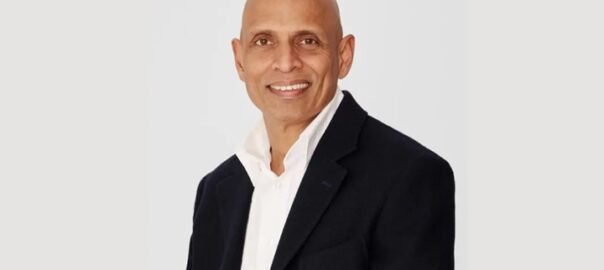
Raju Vuppalapati

Indian-origin CEO exits leadership of major Australian fashion brand

Raju Vuppalapati, Chief Executive Officer of Country Road Group (CRG), has announced he will step down from his role at the end of August 2025 to pursue personal interests, concluding a four-year tenure marked by both transformation and turbulence at the prominent Australian fashion retailer.

Vuppalapati, who joined CRG in 2021, oversaw the management and repositioning of the group’s brands—including Country Road, Witchery, Trenery, Mimco and Politix—as well as the group’s return to department store Myer.

Reflecting on his departure, he described the role as an “honour and a privilege.”

“It has been a privilege to lead our passionate team and iconic brands,” he said in a statement.

“I know that I am leaving Country Road Group well-positioned to pursue its next chapter with compelling strategies, a strengthened culture and a clear pathway to reignite profitable growth.”

His resignation comes during a period of ongoing leadership changes at CRG. In recent years, several senior brand and group executives have exited the business. These changes have occurred in the context of a challenging retail environment and internal restructuring aimed at revitalising the group’s performance.

It is reported that while the company did not comment directly on reports of internal tensions, it acknowledged that maintaining strong workplace culture had been a priority.

Woolworths Holdings, the South Africa-based parent company of CRG, expressed its appreciation for Vuppalapati’s contributions. Chief Executive Roy Bagattini credited him with spearheading a major transformation that has reshaped the business for future growth.

“The business transformation has been one of the most pivotal strategic initiatives undertaken by the group,” said Bagattini.

“Raju leaves the company in a foundationally much stronger position.”

The group reported a 6.2 per cent decline in sales in the first half of the 2024–25 financial year, while profit margins have been impacted by broader economic and operational headwinds. In 2024, he described the conditions as a “perfect storm” facing the retail sector.

Founded in 1974, Country Road is a mainstay of the Australian fashion scene, known for its modern, minimalist aesthetic. The company has yet to announce his successor, although recruitment for a new CEO is understood to be underway. In the meantime, CRG will continue to implement its strategic roadmap and focus on stabilising performance across its brand portfolio.

News Credits- The Australia Today

flipkart

Flipkart secures NBFC license from RBI—becomes first Indian e-comm player to offer direct lending

Flipkart, last valued at $37 billion in 2024 when it raised $1 billion in a funding round led by Walmart, is shifting its holding company from Singapore to India. Walmart also aims to take the 17-year-old company public.

Flipkart has received a lending licence from the Reserve Bank of India (RBI), the Walmart-backed ecommerce company confirmed on Thursday. The nod came in March this year. The move could pave the way for Flipkart to offer loans directly to customers, sources said noting the specific instances in which the customers at times choose the EMI model or instalment mode to pay for products they choose.

This is the first time the RBI has granted a large e-commerce player in India a non-bank finance company (NBFC) licence, allowing it to lend but not take deposits. Most e-commerce platforms currently offer loans in tie-ups with banks and NBFCs, but a lending licence will enable Flipkart – India’s largest e-commerce firm – to lend directly, a more lucrative model for the group.

Walmart currently holds over 80 per cent stake in Flipkart. It had bought a majority stake in the ecommerce platform back in 2018. In April this year, IPO-bound Flipkart had shared its intention to relocate its holding company from Singapore to India, a strategic decision that the homegrown e-commerce firm said reflects “deep and unwavering commitment to India and its remarkable growth”.

“We are inspired by the Government of India’s strong vision and proactive initiatives in fostering a thriving business environment and ease of doing business, which have significantly shaped our journey. This move represents a natural evolution, aligning our holding structure with our core operations, the vast potential of the Indian economy and our technology and innovation-driven capabilities to foster digital transformation in India,” a Flipkart spokesperson had said in April.

The central bank issued its certificate of registration – a document that officially recognizes a company as an NBFC – to Flipkart Finance Private Limited on March 13. A final decision on the launch will be subject to the completion of various internal processes such as the appointment of key management personnel and board members and the finalisation of business plans, the source said.

According to Reuters, Flipkart plans to lend directly to its customers on its popular e-commerce platform and through its fintech app super.money. It may also offer financing to sellers on the platform. At present, the e-commerce giant offers personal loans to customers through tie-ups with lenders such as Axis Bank, IDFC Bank and Credit Saison.

Flipkart, last valued at $37 billion in 2024 when it raised $1 billion in a funding round led by Walmart, is shifting its holding company from Singapore to India. Walmart also aims to take the 17-year-old company public.

Walmart bought a controlling stake in Flipkart in 2018, which also gave it ownership of PhonePe, a fintech firm also preparing for an IPO. Earlier this year Flipkart’s rival Amazon acquired a Bengaluru-based non-bank lender Axio, but the deal is yet to be cleared by the central bank.

News Credits- mint

lululemon

Lululemon tumbles as slowing demand, tariff costs prompt annual profit cut

Lululemon cut its profit forecast for the year, hurt by higher costs to mitigate U.S. tariffs and as tepid demand for its latest products failed to draw away buyers from upstart athleisure rivals such as Vuori.

Lululemon Athletica’s (LULU.O), shares slumped 22% in trading after the bell on Thursday.

“We experienced lower store traffic in the Americas, partially reflective of economic uncertainty, inflationary pressures, lower consumer confidence, and changes in discretionary spending,” Lululemon said in a statement.

U.S. President Donald Trump’s chaotic global tariffs have fanned fears that the economy is headed for stagflation, pushing even wealthier shoppers to prioritize essential purchases.

Companies are diversifying sourcing and increasing prices to mitigate any hit from tariffs, which are expected to shrink margins.

“We are planning to take strategic price increases … on a small portion of our assortment, and they will be modest in nature,” Lululemon’s finance chief Meghan Frank said.

The company will also negotiate with vendors and cut costs, Lululemon said in a filing.
In 2024, 40% of Lululemon’s products were manufactured in Vietnam, and 28% of its fabrics were sourced from mainland China.

The company now expects annual profit between $14.58 and $14.78 per share, compared with previous expectations of $14.95 to $15.15 each.

Lululemon also forecast second-quarter profit below an average estimate from LSEG. Its revenue forecast of between $2.54 billion and $2.56 billion was largely in line.

“Lululemon also hasn’t had a lot of huge hit products recently that are having some effect,” said Morningstar analyst David Swartz.

It introduced new apparel franchises for men and women — including the Glow Up activewear collection and its new lifestyle trousers Daydrift — but those have done little to boost sales.

“Lululemon has a history of beating numbers, so even when Lululemon doesn’t raise estimates, that’s considered to be kind of a disappointment,” Swartz added.

Author Credits- Ananya Mariam Rajesh
Reuters

nykaa fashion brand ambassadors

Nykaa Fashion names Ishaan Khatter, Shanaya Kapoor as brand ambassadors

Nykaa Fashion has onboarded Bollywood actors Ishaan Khatter and Shanaya Kapoor as its new brand ambassadors.

With this collaboration, Nykaa Fashion aims to highlight its offerings through Khatter and Kapoor who will bring their individual fashion perspectives to the platform.

Ishaan Khatter and Shanaya Kapoor will contribute to Nykaa Fashion’s messaging through their individual styling approaches.

Commenting on the association, Adwaita Nayar, executive director CEO of Nykaa Fashion in a statement said, “Shanaya and Ishaan are the perfect voices for this generation, unafraid to experiment, authentic in their choices, and always pushing the boundaries of personal style. With them on board, we’re dialling up a fashion conversation that’s bold, inclusive, and rooted in self-expression, just like our community.”

Ishaan Khatter added, “Being part of a platform where one can find pieces that speak to them and make it easy and accessible to dress for the occasion is exciting. I’m happy to be the face for Nykaa fashion and hope for the platform to grow even further through our collaboration together.”

Nykaa Fashion is one of the fastest-growing fashion platforms in India with over 3200 brands across women, men, kids, luxe, and home categories.

Author Credits- Maverick Martins
FASHION NETWORK

eCommerce’s latest trend

AI and social media reshaping e-commerce, DHL reports

According to DHL eCommerce’s latest trend report published on June 4, 70% of global consumers expect to shop primarily through social media by 2030 and desire AI-driven shopping tools to help guide their buying decisions.

The E-Commerce Trends Report 2025, which draws on insights from 24,000 online shoppers across 24 key global markets, also reveals the importance of getting delivery and sustainability right.

“It’s important to recognize that there isn’t just one type of online shopper or one type of market,” said Pablo Ciano, CEO of DHL eCommerce. “The reasons for cart abandonment can vary widely. Our E-Commerce Trends Report analyzes the trends and developments shaping online shopping worldwide, to help our customers grow their businesses.

“Logistics plays a crucial role in this process, and we see ourselves as a vital partner, offering our customers relevant insights, expertise and solutions to drive their success.”

Shopping powered by AI

The trend report reveals that AI is one of the most highly anticipated and demanded innovations among consumers, with seven in 10 shoppers globally wanting retailers to offer AI-powered shopping features. Virtual try-ons, AI-powered shopping assistants and voice-enabled product search top the list of features consumers actively want to use. The report also shows shopping via voice commands is on the rise, with 37% of global shoppers – and nearly half of social commerce users – making purchases hands-free.

Social commerce growth

According to the report, traditional e-commerce websites are being replaced, or bypassed, by social platforms, with consumers turning to apps like TikTok, Instagram and Facebook for both discovery and purchase. The report reveals that seven in 10 shoppers have already made a purchase via social media, and that same proportion expects these platforms to become their primary shopping destination by 2030.

The power of influence also plays a critical role: 82% of shoppers said viral trends and social buzz influence their buying decisions.

TikTok in particular is driving change in markets such as Thailand, where 86% of online shoppers report buying through the app, and globally among Gen Z, where almost 50% are already using the platform to purchase.

According to DHL, this shift signals a major transformation in how and where brands need to engage with their audiences, and calls for seamless, mobile-native experiences built for in-app conversion.

Delivery and returns

While new technologies continue to transform the digital shopping experience, it’s the fundamentals of delivery and returns that remain the biggest drivers of cart abandonment, according to the report.

Shoppers aren’t willing to compromise when it comes to convenience, flexibility and control, with 81% of consumers abandoning their purchase if their preferred delivery option isn’t available. Just as critically, 79% said they would leave if the return process didn’t match their expectations.

Trust also plays a major role, with three out of four shoppers reporting they will not buy from a retailer if they don’t trust the delivery and returns provider.

Sustainability and the circular economy

According to the report, sustainability has evolved from a brand differentiator into a core consumer demand, with 72% of shoppers globally considering sustainability when making online purchases. For many, this goes beyond packaging or shipping – one in three shoppers have abandoned their carts due to sustainability concerns. Among Gen Z, this figure spikes to nearly one in two, the report showed.

Consumers are also embracing more circular models of consumption, with over half opting for pre-owned or refurbished goods, motivated by environmental values and cost-efficiency. Additionally, 58% of shoppers express a willingness to participate in recycling or buy-back programs offered by retailers.

Author Credits- HAZEL KING
Parcel and Postal technology INTERNATIONAL

Kleenex

Kimberly-Clark nears $3.5 billion sale of global tissue business to Suzano, WSJ reports

Kimberly-Clark (KMB.O), is nearing a sale of its Kleenex and tissue businesses outside of North America for around $3.5 billion to Brazilian pulpmaker Suzano (SUZB3.SA), opens new tab, the Wall Street Journal reported, citing people familiar with the matter.

A deal could be completed as soon as Thursday, the report said on Wednesday.

Reuters could not immediately confirm the report. Kimberly-Clark and Suzano did not immediately respond to requests for comments.

Reuters had reported in April citing people with knowledge of the matter that along with Suzano, Southeast Asia’s Royal Golden Eagle (RGE) and Asia Pulp & Paper Co (APP) were the final bidders for Kimberly-Clark’s international tissue business, valued at around $4 billion.

The unit, which was put on the block by Kimberly-Clark as part of a restructuring initiated last year, generates around $500 million in annual earnings before interest, taxes, depreciation, and amortization (EBITDA).

The sale is proceeding as U.S. President Donald Trump’s broad trade tariffs weigh on Kimberly-Clark’s business outlook. The consumer goods company slashed its annual profit forecast due to increased costs in April as a result of the tariffs.

In 2022, Suzano announced a deal to buy the Irving, Texas-headquartered company’s tissue paper operations in Brazil for an undisclosed sum.

News Credits- Reuters

meesho

Meesho expands focus on personal care, onboards HUL, P&G

Meesho expands personal care segment by onboarding HUL, P&G, and Himalaya to boost Meesho Mall. With rising demand in smaller cities, the platform offers branded products like Dove, Pampers, and Vaseline. Meesho eyes $10B IPO amid rapid growth in GMV, users, and non-metro market reach.

E-commerce platform Meesho is focusing on increasing its presence in the personal care category and has onboarded leading FMCG companies Procter & Gamble (P&G), Hindustan Unilever (HUL) and Himalaya, the company said in an announcement on Wednesday.

The move is a part of the company’s effort to expand Meesho Mall, its branded products vertical.

The announcement comes at a time when the demand for such products is rising across the smaller cities, which are typically considered more price-sensitive.

These partnerships mark a shift in the platform’s strategy of positioning itself as a low-cost e-commerce platform, with a focus on unbranded products.

The expanded assortment brings well-known brands like Pampers, Gillette, Dove, Pantene, Vaseline and Head & Shoulders to a much larger base of consumers.

“Shoppers are turning to personal care brands for their everyday essentials — from face wash and lipstick to baby diapers and sanitary pads. Meesho Mall is uniquely positioned to meet this growing demand with a wide selection of reliable, high-quality brands,” the announcement said.

According to brokerage firm CLSA, Meesho has reached a gross merchandise value (GMV) run rate of $6.2 billion for FY25, making it the third-largest e-commerce platform in the country.

By order volume, it commands the largest share of 37% of the e-commerce market.

With 4.9 million daily orders and 180 million monthly active users (MAUs), the platform now leads in order volume and user engagement metrics. Its average order value (AOV), however, remains low as compared to Amazon and Flipkart, at Rs 315–Rs 350.

The report pegs Meesho’s GMV and revenue to grow at a 26% compound annual growth rate (CAGR) over the next six years, driven by deepening e-commerce penetration in non-metro markets.

Meesho is planning to go public later this year and is looking at a potential valuation of $10 billion.

Author Credits- Raghav Aggarwal
FINANCIAL EXPRESS

Lazada

Lazada spending P3 billion to expand operations in Mindanao

MANILA, Philippines — E-commerce platform Lazada is spending as much as P3 billion this year to grow its operations in Mindanao.

Lazada Philippines CEO Carlos Barrera told reporters that the e-commerce player intends to spend “more than P2 billion to P3 billion” for Mindanao this year.

He said Lazada sees an opportunity to grow in Mindanao, which currently has a low e-commerce penetration rate in the single-digit level.

“When we look at the opportunity, it’s not so much about what it accounts for today. But we believe that over time, it should be a sizable percent of our business, (around) 20 to 25 percent. So we’re investing today to build that future growth and to help bridge that e-commerce development gap,” he said.

According to Barrera, the investment is going to marketing campaigns, especially shipping vouchers to make it cheaper for Mindanao customers to shop online.

“Historically, the cost of delivering items to Mindanao was the highest in the country. So we have been investing a lot and we have been able to lower the cost of shipping by more than P40 per order,” he said.

Barrera said Lazada is also investing in sellers on the platform.

“We have onboarded more than 500 sellers over the past few months and we’re also investing a lot to help them grow,” he said, noting this is done by co-funding the vouchers so these businesses can gain traction and reduce the cost of their operations.

In addition, Lazada is also investing in infrastructure and the e-commerce ecosystem.

Barrera said Lazada has opened an office in Mindanao and plans to open more hubs.

“We’re also helping with financing options. Together with our partners, we’re giving more buy now, pay later options for the users in the area and even seller financing,” he said.

While Lazada has earmarked an investment from Mindanao, it is also looking to invest in the Philippines through its $100 million fund to support the creator economy in Southeast Asia.

“The Philippines is one of the biggest countries for influencers, especially when it comes to many mobile individuals, people that are recommending things. We have very strong beauty bloggers, mother and baby bloggers, so it will probably be one of the top two countries in terms of investment,” he said.

As Lazada aims for growth, it is set to hold the 6.6 Super Wow Sale, the platform’s much-anticipated mid-year mega sale.

During the mega sale, which will run from June 5 to 8, shoppers can get Lazada vouchers up to P2,000 off, LazFlash deals up to 90 percent off, as well as access to authentic, high-quality products from both top local and international brands on LazMall.

Author Credits- Louella Desiderio
Philstar GLOBAL

Nestle India

Nestle India to invest Rs 5,000 crore to increase capacity

Nestle India to invest Rs 5,000 crore in capacity expansion, new product lines, and sustainability across its factories. CMD Suresh Narayanan highlights growth, premiumisation, and rural outreach. New CMD Manish Tiwary to take over from August 1, 2025.

To meet the growing demand for its products, Nestle India will invest around Rs 5,000 crore in the country in coming years, it said in the Annual Report for 2024-25 released on Tuesday.

“Consistent with the growth in business and operations, the company plans to carry out capital expenditure to increase the capacities, productivity, investment in the new product lines and sustainability initiatives across all its existing factory locations,” the company said in the report.

“…this is estimated at around Rs 5,000 crore in coming years,” it added.

In his last letter to the shareholders as the Chairman and Managing Director of the company, Suresh Narayanan said that the company’s capital expenditure as a percentage of sales has jumped from 1.8% in 2015 to 10% in FY25.

“This not only demonstrates the focus on Indian consumers but also our commitment to manufacture in India and ‘Make in India’ as a theme,” he said.

Narayanan will retire as CMD of the company on July 31. Former Amazon executive Manish Tiwary will replace him on August 1.

The annual report showed that in FY25, the company spent Rs 2,004.4 crore towards capital expenditure, its highest in a decade.

It operates nine factories in the country and is currently setting up the tenth facility in Khordha, Odisha.

The FMCG major said that while the capacity expansion has planned for all categories, the focus will be on foods, chocolates and beverages. For instance, the upcoming Khorda facility will focus solely on the company’s food portfolio – which includes the famous Maggi.

Moreover, the company would continue to expand its premium portfolio. “Premiumisation remains a key growth engine for your company,” it said.

Narayanan said that Nestle India’s revenue grew at a compounded rate of 10.3% since 2015. The corresponding profits from operations grew by 13.5%, during the same period.

“In 2015, many considered us to be solely a MAGGI noodles company. Since then we recalibrated and rejuvenated the portfolio launching over 150+ new products that have contributed to 7% of sales,” he said.

Since 2016, Nestle India has added 1.3 million retail outlets, with the highest gains amongst peers in 2024. Its RUrban strategy, which began in 2019, has increased RUrban distribution touchpoints to 28,240.

“Today we are present in approximately 209,050 villages,” Narayanan said.

Currently, India is the largest Maggi and the second-largest KitKat market for the company globally.

The company’s confectionery business here has tripled in the last ten years. Munch and Milkybar have also doubled their business.

In the distribution channels, Narayanan said that about 40% of the distributors have been associated with the company for over 10 years. Moreover, e-commerce contributes 8.6% to sales, out of which quick commerce accounts for around 45%.

Author Credits- Raghav Aggarwal
FINANCIAL EXPRESS