All posts by Admin

dhl ecommerce

DHL eCommerce UK adds 30 bio-LNG-powered trucks to fleet

DHL eCommerce has doubled the size of its fleet of liquefied natural gas-powered (LNG) vehicles with the addition of 30 new Volvo FM trucks to its operations across Coventry, Leicester, Birmingham and Milton Keynes.

The trucks, which will replace diesel vehicles, will be used on routes throughout the UK and are expected to reduce DHL’s annual greenhouse gas (GHG) emissions by more than 1,000 metric tons of CO2e.

To support the expanded LNG fleet, DHL eCommerce UK is investing in additional refueling infrastructure, including a secondary bio-LNG tank at its new state-of-the-art hub in Coventry. The site will serve as a critical hub for DHL’s growing low-GHG-emissions operations in the Midlands and beyond.

Stuart Hill, CEO of DHL eCommerce UK, commented, “We’re delighted to expand our fleet with lower GHG emission vehicles and take diesel trucks off the roads. As a business, we are committed to being at the forefront of sustainable logistics so we will continue to make the necessary investments to reduce our GHG emissions footprint as we work towards our sustainability targets.”

This fleet investment forms part of DHL Group’s global sustainability strategy, which includes a commitment to reduce GHG emissions to net-zero by 2050.

Author Credits- HAZEL KING
Parcel and postal technology INTERNATIONAL

cosmetics boom

Myntra to Zepto, platforms cash in on cosmetics boom; K-beauty soars 75% on Amazon

Zepto co-founder Aadit Palicha last week announced the 10-minute delivery for luxury cosmetic brands– Estée Lauder’s M.A.C., The Ordinary and Clinique–on the platform.

From discounted offerings to previously elusive luxury and global brands, e-commerce and quick commerce platforms are witnessing a multifold surge in beauty and skincare product sales amid soaring demand.

In fact, capitalizing on this trend, Zepto co-founder Aadit Palicha last week announced the 10-minute delivery for luxury cosmetic brands– Estée Lauder’s M.A.C., The Ordinary and Clinique–on the platform.

After observing a surge in demand for existing beauty brands like Maybelline, Lakmé, and Faces Canada, Mamaearth, Renee, Swiss Beauty, and SUGAR Cosmetics, Zepto decided to expand its portfolio by including luxury brands as well, to offer users a wider range of options, said Devendra Meel, Chief Business Officer at Zepto.

According to a report by Bengaluru-based consultancy firm Redseer, India’s beauty industry is expected to reach $34 billion by 2028, driven by rising disposable incomes, increased consumer aspirations, and the influence of social media and e-commerce.

Highlighting changing consumer behaviour, Amazon Beauty, Director Siddharth Bhagat told Storyboard18 about a strong shift towards tech-enabled, trend-led and personalised experiences for the cosmetics and skincare products. He said that faster deliveries, influencer-driven discovery, and the rise of D2C and international brands are further fueling the momentum.

“Amazon has witnessed a 12x growth in cosmetics due to the recent success of newly launched brands in 2025,” Bhagat added.

Nykaa, the pioneer in building a beauty-centric digital commerce platform, said its beauty business has grown 25 percent on a year-on-year basis, recording a revenue of Rs 7,251 crore for fiscal year 2025. Nykaa’s beauty vertical includes e-commerce, physical retail, its house of brands, as well as an eB2B business.

Nykaa’s closest competitor, Myntra, has also ramped up its beauty segment on the platform to capitalise on the demand.

Deepak Joshi, Senior Director – Category Management, Beauty and Personal Care, Myntra said the platform’s dedicated ‘Beauty’ segment has outpaced the online beauty market by two-fold, registering more than 50 percent consistent year-on-year increase in monthly active users. “Currently, Myntra Beauty boasts more than 2,900 brands,” Joshi added.

‘Tier-2 demand surge’

Industry experts have acknowledged that tier-2 cities have emerged as a crucial market for platforms, driving demand for both affordable and premium cosmetics and skincare products.

Meel from Zepto said that while quick commerce has largely remained metro-centric, traction for beauty products has notably increased in Tier-2 cities as well.

Myntra’s Joshi also noted that nearly half of the beauty buyers on the platform come from tier-2 and tier-3 cities. Besides, He also mentioned that Myntra’s quick commerce service, M-Now, witnessed a 1.4x spike in demand for beauty products on Mother’s Day in 2025.

Notably, Vishal Chaturvedi, Vice President, The Body Shop, Asia South, said that quick commerce has delivered exceptional results for the company, almost doubling its growth compared to last year. “Our specially curated selection of packed gift boxes and mini packs has seen strong sales on the quick commerce platform,” Chaturvedi said.

‘Rise of K-Beauty’

In the competitive beauty market, digital commerce platforms have expanded their portfolio by adding luxury and premium beauty offerings, particularly Korean beauty (K-beauty) brands.

According to the Amazon spokesperson, the K-Beauty category on the platform has witnessed a 75 percent year-on-year growth.

According to Bhagat, K-beauty products primarily resonates with urban and digital-savvy women, aged between 20 and 35 years. “The urban women have embraced K-beauty products to a larger extent, especially from cities like Bengaluru, Mumbai, Delhi, Hyderabad and Pune”.

Moreover, women from tier-2 cities are also exploring the K-beauty products through trial SKUs like sheet masks and minis, he added.

Bucking the trend, Bhagat said Amazon has observed that a rising cohort of male consumers are also experimenting with Korean skincare, particularly around functional solutions like cleansers, serums, and sunscreens.

A range of K-beauty brands have entered into Indian market via digital commerce platforms, such as COSRX, Laneige, and Beauty of Joseon, TIRTIR, Medicube, and Skin1004.

Meanwhile, Myntra said that they have witnessed a 200 percent YoY growth in K-beauty category.

Beyond K-beauty, several international luxury beauty brands are also capturing Indian consumers’ attention through digital channels.

Nykaa has a dedicated segment, called Nykaa Luxe, which offers a wide range of cosmetics and skincare products from luxury brands such as Armani beauty, Chanel, L’Oréal Luxe, Eucerin, Dior, Tom Ford, sol de janerio, among others.

The company noted that the average annual spend by its top 10% customers is $395 on premium beauty products.

Following suit, other platforms like Tira and Tata CliQ have also expanded their beauty portfolios.

Myntra’s quick commerce venture also offers a selection of international and premium beauty brands, including YSL and Estee Lauder.

A report by global consultancy firm Kearney underscored that the luxury beauty accounts for about 4 percent share of the overall beauty and personal care market. In contrast, developing Asian peers, such as Thailand, Vietnam, and Malaysia, see luxury beauty holding a 20-25 market share.

However, when it comes luxury beauty market, offline stores have outpace online platforms, according to Kearney.

The firm said that 70 percent of luxury beauty sales came from the offline channel in the past year.

“Specialty stores, with beauty-focused multi-brand retailers such as Sephora and Nykaa, contribute to 25 percent of the luxury beauty market, followed by boutiques or standalone brand stores, such as MAC, Forest Essentials, and Dior, with 20 percent of the market,” the report added.

Author Credits- MANSI JASWAL
STORYBOARD 18

lvmh launces spktrl

LVMH alumni launches quiet tech jewelry marque SPKTRL

Talented LVMH alumna Katia de Lasteyrie has launched a highly innovative new jewelry marque SPKTRL and unveiled its very first quiet tech product.

Think of it as high jewelry’s smartwatch moment: a diamond jewelry ring that communicates key digital messages silently, without screens, noise, or disruption.

Pronounced “Spectral,” SPKTRL’s light ring uses color to communicate, allowing wearers to personalize the insights they receive through a minimalist app. Hence, the perfectly colorless diamond can light up soft blue to indicate a message from a loved one, while a vibrant magenta could indicate a critical work update. Quiet tech represents the use of non-intrusive technology that blends seamlessly into the background, a key element of the new brand.

Featuring a screenless design, messages are transmitted through a CVD lab-grown diamond, selected for both its beauty and its symbolism.

“It’s a material created with precision by human ingenuity, not chance,” explains Lasteyrie, the founder and CEO of SPKTRL.

Optically and structurally identical to mined diamonds, lab diamonds are increasingly used in deep-tech fields such as quantum computing, she notes.

Design-wise, the SPKTRL ring is essentially indistinguishable from a classic Place Vendôme jewelry piece—yet still manages to invisibly encapsulate hidden layers of technology. In a world of jewelry built on centuries of tradition, SPKTRL’s vivid, color-changing diamond ring signals a tech-driven transformation akin to the one that revolutionized watchmaking.

While most wearables like the Apple Watch are function-first devices, SPKTRL offers something different: a design-led, jewelry-first approach.

“It redefines technology-augmented jewelry—much like smartwatches did for traditional watches—and opens the door to a whole new category,” insists de Lasteyrie, an elegant mum of two who lives a golf chip away from Place Vendôme.

Katia de Lasteyrie is a former innovation lead for LVMH’s Watches & Jewelry division. With almost 20 years of experience in high and fine jewelry, and stints with Christie’s and Chanel, Lasteyrie is as fluent in craftsmanship as she is in innovation.

Her work at LVMH included the development of interactive luxury objects for Louis Vuitton, as well as years of research into the intersection of material culture and emotional design. SPKTRL is the result of that trajectory: a convergence of aesthetic discipline and embedded function. The brand was developed around a single belief: time is the ultimate luxury, which is why SPKTRL offers owners the chance to edit away non-essential communications in an elegant manner.

“SPKTRL appeals to a new art de vivre: one where attention is curated, not consumed. Our technology isn’t designed to replace phones or make you faster but to give you back control. The stone is the interface, and the color is the language. Personalized to each user, our ring communicates important messages in a novel way that is truly mindful of their time and attention,” underlines Katia de Lasteyrie.

Manufactured in France, this talismanic signet ring is designed to represent power and wisdom, crafted from a blend of titanium and high-precision metals.

SPKTRL’s limited-edition debut piece will be available for exclusive order this fall, at a four-figure euro price tag, by visiting: https://spktrl-paris.com.

Author Credits- Godfrey Deeny
FASHION NETWORK

al-futtaim acquire cenomi retail

UAE’s Al-Futtaim to acquire 49.95% of Saudi’s Cenomi Retail

Cenomi Retail’s founding shareholders signed a share purchase agreement with Al-Futtaim with shares priced at 44 riyals each

RIYADH: Emirati conglomerate Al-Futtaim is to buy a 49.95% stake in Saudi Arabian franchiser Cenomi Retail in a deal worth more than 2.5 billion riyals ($667 million), Cenomi Retail said in a statement on Sunday.

Cenomi Retail’s founding shareholders signed a share purchase agreement with Al-Futtaim with shares priced at 44 riyals each, said the statement.

As part of the share purchase agreement’s completion conditions, the two companies are negotiating a shareholder loan of at least 1.3 billion riyals to boost Cenomi Retail’s balance sheet.

Cenomi Retail is a large franchiser in Saudi Arabia operating food and retail outlets, while Al-Futtaim of the United Arab Emirates is a private business group with operations ranging from financial services to real estate and retail.

“This investment represents substantial foreign direct investment (FDI) from the UAE private sector and underscores the robust economic partnership between our countries,” Al-Futtaim’s Vice Chairman and CEO Omar al-Futtaim said in the statement.

Saudi Arabia has been attempting to boost FDI as part of its Vision 2030 program to diversify the economy away from oil dependency and expand the private sector. ($1 = 3.7509 riyals) (Reporting by Pesha Magid; Editing by Aidan Lewis)

Author Credits- Pesha Magid
ZAWYA BY LSEG

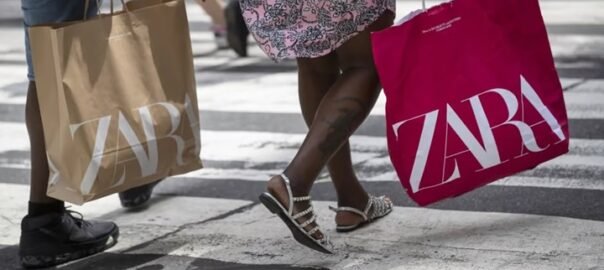
Zara heiress Sandra Ortega

Zara heiress Sandra Ortega grows her fashion fortune with 71% profit surge

Rosp Corunna, the family office of Inditex SA heiress Sandra Ortega, posted a 71% profit surge in 2024, reflecting strong returns tied to Ortega’s share in the world’s largest listed fashion retailer and strategic expansion into European real estate.

Ortega, Spain’s wealthiest woman and the daughter of Inditex co-founder Rosalia Mera, oversees a 5% stake in the company best known for global fast-fashion brand Zara. The stake, managed through Rosp Corunna, remains the core of her investment portfolio.

The firm reported €300 million ($348 million) in profit last year, according to its annual earnings filings. All profits are scheduled to be reinvested in 2025. Rosp’s total assets rose by 24.5% to reach €10.1 billion, underlining Ortega’s growing financial influence within the global fashion economy.

In addition to her stake in Inditex, Rosp Corunna holds a 5% stake in Spanish pharmaceutical firm PharmaMar SA and maintains a growing presence in high-value real estate. The portfolio’s diversification complements its foundation in fashion-linked capital.

Ortega and her brother inherited their Inditex shares following the death of their mother, Rosalia Mera, more than a decade ago. Mera co-founded Inditex with Amancio Ortega, the family patriarch. Sandra Ortega does not hold any operational role at the company.

In early 2024, Rosp acquired two buildings in Germany for €150 million, including the local headquarters of telecom operator Telefonica SA. These acquisitions follow previous real estate purchases in Frankfurt and Vienna, as well as land in Troia, Portugal, designated for a luxury resort project. Although not directly tied to Inditex’s operations, Ortega’s growing real estate footprint echoes fashion’s increasing convergence with lifestyle and hospitality investments.

Meanwhile, Marta Ortega — daughter of Amancio Ortega from a second marriage — has served as chair of Inditex since 2022, a role that further cements the family’s legacy globally. Shares of Inditex rose 26% in 2024, reflecting continued investor confidence in the company’s performance and agile supply chain model.

News Credits- FASHION NETWORK

Emirates Post partners with DHL

Emirates Post partners with DHL on express delivery services

Emirates Post has signed a strategic agreement with DHL Express UAE to launch DHL’s Express Easy service at select Emirates Post branches.

The Express Easy service is user-friendly with all-inclusive pricing, making it easier for individuals and small businesses to send cross-border e-commerce packages.

According to Emirates Post, the partnership marks a milestone in developing the national postal network into a globally connected service platform, and supports Emirates Post’s wider ambition to become a central player in the UAE’s growing trade and e-commerce ecosystem.

It also reflects the commitment of both companies to providing agile, customer-focused solutions for individuals, entrepreneurs and SMEs, and supports the country’s wider ambition to become a leading logistics and digital economy hub.

Author Credits- HAZEL KING
Parcel and postal technology INTERNATIONAL

Walmart Mexico

Walmart Mexico’s market value sheds $3.7 billion after Q2 profit dip

MEXICO CITY – Walmart’s Mexico and Central America unit, known as Walmex (WALMEX.MX) saw some $3.7 billion wiped from its market value on Thursday after the retailer posted weaker-than-expected margins for its second quarter, although revenues grew.

The stock tumbled 7.4% on Thursday, its steepest daily decline since 2020, decreasing Walmex’s market capitalization by 68.6 billion Mexican pesos ($3.7 billion).

Mexico’s largest retailer, which operates Walmart, Sam’s Club and Bodega Aurrera stores across six countries, on Wednesday posted a 10% drop in net profit, although sales were up 8%, as Walmex spent more than analysts expected.

Net profit was 11.2 billion pesos ($598 million) in the quarter, below analysts’ expectation of close to 13 billion pesos, while the core earnings margin hit 9.5%, the lowest level for that quarter since 2020.

“The company faces a very important challenge: regaining profitability,” analysts at financial group Banorte said.

Actinver analyst Antonio Hernandez said in a note to clients that the margin pressure came from investments in tech, e-commerce, store openings and labor expenses.

“The benefits of these investments will continue to translate into stronger growth and accelerated market share gains,” Chief Financial Officer Paulo Garcia said in a call with analysts on Thursday.

“We’re prioritizing investments with the highest returns and dropping those with lower returns,” he added.

Walmex has made a push in recent years to consolidate its market share, particularly in online sales.

CEO Ignacio Caride, who in a pre-recorded webcast on Wednesday said he was unhappy with the results, said he believed the group’s overall strategy was on track and reiterated the company’s guidance and share buyback plans.

Caride took the job last year after more than a decade at e-commerce powerhouse MercadoLibre (MELI.O).

Executives noted that Walmex would continue to expand its store footprint, with 4,124 stores currently and 25 new openings over the quarter, and push on with a remodeling campaign for a wave of stores that opened more than a decade ago.

Executives said on the call that unusually torrential rains in June in Mexico City – its wettest June in over 20 years – had “a big impact” on food and drinks sales. Built on a lake, Mexico City is prone to floods in and around its metropolitan area.

($1 = 18.7500 Mexican pesos)

News Credits- Reuters

Patek Philippe Watch

Tiffany’s $52,000 Patek watch strategy backfires among elite clients

Tiffany & Co., the iconic American jeweler now owned by LVMH, is facing criticism from its wealthiest clients after a controversial sales strategy for an exclusive Patek Philippe timepiece. The limited-edition Nautilus 5711, featuring Tiffany’s signature robin’s-egg blue dial, became a flashpoint in luxury retail, with customers spending millions on jewelry in hopes of securing one of only 170 coveted watches priced at $52,635.

Tiffany sales associates referred to them as “watch monsters.” These were the obsessives—the affluent clients who believed they deserved one of the rare Patek Philippe Nautilus 5711 watches made in Tiffany’s robin’s-egg blue.

To commemorate 170 years of collaboration between the two heritage brands, Patek Philippe produced just 170 timepieces. As demand soared, Tiffany’s leadership—led by Americas head Christopher Kilaniotis—recognized an opportunity: they could prompt clients to spend millions on jewelry for a chance to buy the $52,635 watch.

Salespeople were allegedly encouraged to guide top clients toward purchases worth $2 to $3 million. There was no official waitlist and no guarantees. Just whispers, strategy—and frustration.

“Everyone wanted that piece,” said luxury watch consultant Oliver R. Müller. “With rich people, if you tell them they can’t have something, they want it. It’s the psychology of billionaires.”

The release of the Blue Dial came during the pandemic-era luxury boom. For Tiffany, the timing was ideal. The brand had just entered a new chapter under LVMH Moët Hennessy Louis Vuitton SE, which acquired it for $16 billion in 2021. The acquisition was the largest in luxury history and aimed to reinvigorate Tiffany, whose sales had stagnated before the deal.

But what began as a masterstroke of exclusivity has become a cautionary tale—how mishandled scarcity can tarnish brand prestige.

Since the Blue Dial’s launch, Patek Philippe has closed three of its four boutiques inside Tiffany locations. Former staff say the fractured relationship with the Swiss watchmaker continues to weigh on store revenue and staff morale.

Tiffany’s press office declined to comment. Executives Kilaniotis and Anthony Ledru were unavailable for comment. However, LVMH maintains that Tiffany’s strategic shift—including upscale store renovations and a focus on high-end Icons collections—is paying off.

“We are seeing continued very good progress on Tiffany’s transformation plan,” said LVMH Chief Financial Officer Cécile Cabanis in April.

Tiffany remains the biggest contributor to LVMH’s watches and jewelry division, which also includes Bulgari and Tag Heuer. Despite that, Bloomberg forecasts the division will post a 1% revenue decline when LVMH reports earnings on July 24.

Patek Philippe declined to comment on its Tiffany relationship or the Blue Dial’s distribution.

In a 2021 interview, Patek President Thierry Stern hinted at potential trouble: “Tiffany executives may not realize how difficult it’s going to be to choose the clients.”

The financial logic for Tiffany was clear: If even two-thirds of the watches unlocked $2.5 million each in jewelry sales, the company stood to gain nearly $300 million. Sales staff could reportedly earn six-figure commissions on such deals.

But the execution left many clients bitter. Sources claim staff were warned not to put any bundling expectations in writing. Everything was discretionary—and often inconsistent.

Some loyal clients spent millions and received nothing in return. Others who did receive the watch grew frustrated when they appeared on the secondary market, often depreciating in value.

One client sued Tiffany over a $4 million jewelry purchase tied to a delayed custom necklace, ultimately settling out of court. Sources confirm that the client had purchased the jewelry to access the Blue Dial.

Another client, who was asked to spend $5 million, walked away and sold off his existing Patek watches from Tiffany in protest. “I don’t shop there anymore,” he said.

One entrepreneur from the Tri-State area spent over $2 million, believing the purchase would secure him the watch. Tiffany staff reportedly asked him to keep the amount confidential, since they quoted different spending thresholds to different clients.

Eventually, the backlash led Tiffany to make exceptions—allowing some clients to return items valued at over $75,000, which broke company policy, according to sources.

While Patek officially framed its boutique closures as part of a “global consolidation,” insiders claim the Blue Dial controversy played a significant role.

Meanwhile, some luxury clients shifted loyalty to rivals like Cartier. According to Euromonitor International, Tiffany’s global jewelry market share has dropped by one percentage point since 2022, while Cartier’s has increased.

In contrast to LVMH’s flat watch and jewelry sales, Richemont—owner of Cartier and Van Cleef & Arpels—reported 14% growth through March 2024.

Symbolically, the Blue Dial was meant to close a chapter. The final release of the 5711 model. The beginning of the LVMH era. “It was my little gift to say congratulations on buying Tiffany,” Stern said in 2021.

Tiffany had long served as one of Patek’s key U.S. partners. Its dual-stamped dials are highly prized. As hype grew, clients were placed on “wish lists”—a term deliberately used to avoid saying “waitlist,” which implied delay and disappointment.

When photos of celebrities like Jay-Z, LeBron James, and Leonardo DiCaprio wearing the Blue Dial surfaced in early 2022, frustration deepened among regular clients who had spent millions and still had nothing to show for it.

The bundling tactic—requiring jewelry purchases to access the watch—though common in the industry, remains controversial. Watchmakers discourage the practice, and retailers rarely speak of it openly.

“Watchmakers give stores impossible tasks,” said Eric Wind, of Wind Vintage. “You get three watches a year with hundreds on a list. So it becomes: Who’s spending more?”

In 2023, a California man sued a jeweler for allegedly pressuring him to purchase $221,000 worth of watches and jewelry to access a specific Patek model, which he never received.

In 2024, Hermès faced similar litigation over alleged bundling practices with its Birkin bags—an accusation the brand denies.

In April 2022, Tiffany invited top spenders to an exclusive Miami jewelry gala, where staff told guests that spending $2 million or more might secure them a Blue Dial.

Clients stayed in five-star accommodations, attended lavish dinners, and bought pieces worth millions. Sales exceeded expectations.

However, after the event, some clients who had made large purchases were never offered the watch. Others waited months. Frustration spread.

Auction prices for the Blue Dial have since dropped—from $6.2 million in December 2021 to around $1.2 million in 2024, according to WatchCharts.

Patek, known for its craftsmanship, discourages the reselling of its watches. Still, Tiffany reportedly failed to vet some buyers. Watching the resale values tumble became the final disappointment for many.

Yet the bundling continues. In December 2024, Charlie Ho, a Boston anesthesiologist, was told by Tiffany staff that buying jewelry might help him obtain a gold Patek 5396R.

Ho declined. “I’ve played that game,” he said. Years earlier, Ferrari told him to buy several cars to earn access to a limited-edition model. He bought five—and never got it.

“I don’t want to play the game anymore.”

News Credits- FASHION NETWORK

tata digital

Tata Sons plans $400-mn fund infusion into struggling e-commerce biz Tata Digital

Tata Sons will leverage its dividend income from TCS for the investment in Tata Digital and is unlikely to dilute any stake in TCS, sources said.

ata Sons, the holding company at the helm of the $100-billion Tata group, is preparing to inject a crucial dose of capital worth $400 million into Tata Digital, the conglomerate’s digital commerce arm, Tata Digital, people aware of the group’s plans told Moneycontrol.

The digital business—which comprises of consumer platforms like BigBasket, Tata 1mg, and Tata Cliq—will be funded from Tata Sons’ dividend haul from Tata Consultancy Services (TCS), the sources said.

They added that Tata Sons is not looking at any further dilution of its stake in TCS, especially for the funding of the digital venture.

In 2024, Tata Sons had sold TCS shares worth over Rs 9,300 crore to strengthen its balance sheet.

Tata Sons received over Rs 32,700 crore in dividend income from TCS in FY25. The Tata group holding company owns 71.77 percent stake in India’s biggest IT services firm.

Emails sent to Tata Sons and Tata Digital did not elicit a response till the time of publication.

Tata Digital: Mixed report card

The funding plans of the parent company come at a time when Tata Digital has been struggling to make its mark in the competitive ecommerce landscape of India making external fundraising efforts a challenging task.

Launched in 2021 with much fanfare, Tata Digital was envisioned as a “super app” ecosystem, bringing together grocery (BigBasket), healthcare (Tata 1mg), fashion and electronics (Tata Cliq), and more, onto a platform named Tata Neu. The group rapidly acquired and integrated brands, setting aggressive sales targets and positioning itself to take on entrenched contenders like Amazon, Walmart’s Flipkart, and Reliance Retail.

However, the platform struggled to scale up in line with the group’s ambitions.

Tata group has already pumped in $2 billion into the digital venture over the last three years, but its businesses continue to lag well entrenched competitors.

Competitors like Blinkit and Zepto have outpaced BigBasket, capturing a greater share of the fast-growing “quick commerce” market with faster delivery and deeper urban penetration.

Top Level Changes

Its troubles are also highlighted by the top management churn in recent times.

Pratik Pal, the founding CEO, who led Tata Digital since the launch of Tata Neu, stepped down in February 2024 after seemingly struggling to build the app into a unified consumer platform.

Naveen Tahilyani, who was appointed as CEO and MD in February 2024, departed abruptly in May 2025, just 15 months into his tenure, to join Prudential Plc in an international role.

With its competitors continuing to raise large sums of money from the public markets or private investors, the capital infusion from the parent entity will be crucial for Tata Digital’s efforts to turnaround its business.

Author Credits- DEBORSHI CHAKI & SWARAJ SINGH DHANJAL
Money control

Hemant Rupani

Mondelez Executive Hemant Rupani to Take Over as CEO of Hindustan Coca-Cola Beverages

The Coca-Cola Company has announced the appointment of Hemant Rupani as the new Chief Executive Officer of Hindustan Coca-Cola Beverages Pvt. Ltd. (HCCB), effective September 8, 2025. Rupani will succeed Juan Pablo Rodriguez, who is moving on to a new role within the Coca-Cola system.

Currently serving as Business Unit President for Southeast Asia at Mondelez International Inc., Rupani brings over two decades of experience across top-tier Indian and multinational companies, including PepsiCo, Vodafone, and Britannia Industries. At Mondelez, he led strategic operations across markets such as Indonesia, the Philippines, Vietnam, Malaysia, Singapore, and Thailand.

Rupani will report to the HCCB Board of Directors and is expected to play a key role in driving the company’s strategic priorities in India—particularly as HCCB continues to scale operations and enhance its manufacturing and distribution capabilities.

“We look forward to Hemant Rupani’s leadership as we continue to invest in India’s growth story. His deep experience across consumer-focused companies makes him well-positioned to lead HCCB into its next phase,” said a spokesperson from the Coca-Cola Company.

Hindustan Coca-Cola Beverages is the largest bottling partner of The Coca-Cola Company in India. In a significant move late last year, the Jubilant Bhartia Group entered into an agreement to acquire a 40% stake in Hindustan Coca-Cola Holdings Pvt. Ltd., the parent entity of HCCB—marking a key development in Coca-Cola’s India operations.

As the beverage giant strengthens its footprint in the Indian market, Rupani’s appointment signals a focused effort to deepen local engagement, operational agility, and long-term strategic growth.

News Credits- Indian Retailer.com